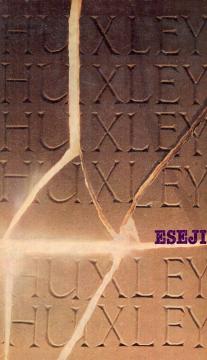
Eseji: Vrata percepcije / Pakao i raj / Ludost, pakost, žalost / Najčudnija znanost

Eseji: Vrata percepcije / Pakao i raj / Ludost, pakost, žalost / Najčudnija znanost

Aldous Huxley

"Essays" by Aldous Huxley is a collection of four key texts that reveal the depth of Huxley's thinking on consciousness, art, science, and literature.

The first essay, "The Doors of Perception" (1954), describes Huxley's psychoactive experience with mescaline. The author reveals how the drug breaks down the mind's filters, opening "doors of perception" to a metaphysical reality, where everyday objects take on a transcendent depth. Huxley connects this to mystical traditions and art, criticizing the materialistic understanding of the mind.

The sequel, "Hell and Heaven" (1956), explores extreme visions of the mind: paradisiacal hallucinations and hellish nightmares in the history of religion, art, and drug-induced states. Huxley analyzes how artists such as Blake and Van Gogh achieve such states, warning of the dangers and potential of expanded consciousness.

In "Madness, Malice, Sorrow," Huxley discusses pathological aspects of the human psyche—madness as an escape from reality, malice as a destructive force, and sorrow as existential pain. The essays call for compassion and understanding of these states through philosophy and literature.

"The Strangest Science" deals with the limits of empirical science, exploring parapsychology, mysticism and unconventional phenomena as a "strange" branch of knowledge that transcends materialism.

The final text, "Scientific Typology in Huxley's Novels of Ideas" (author Matej Mužina), critically analyzes Huxley's works such as "The Wonderful New World" and "The Island", classifying them according to scientific paradigms and ideational structures, emphasizing predictions about technology and society.

Titel des Originals
Collected Essays
Übersetzung
Maja Šoljan, Tomislav Pisk, Davor Slaming
Editor
Franjo Profeta
Illustrationen
Petar Dabac
Titelseite
Nenad Dogan
Maße
21 x 13 cm
Seitenzahl
208
Verlag
August Cesarec, Zagreb, 1980.
 
Latein Schrift. Fester Einband mit Schutzumschlag.
Sprache: Kroatisch.

Angeboten wird ein Exemplar

Zustand:Gebraucht, in sehr gutem Zustand
Nachteile/Unannehmlichkeiten:
  • The cover is missing
Zum Warenkorb hinzugefügt!
 

Interessieren Sie sich für ein anderes Buch? Sie können das Angebot über unsere Suchmaschine suchen und finden oder Bücher nach Kategorien durchsuchen.

Diese Titel könnten Sie auch interessieren

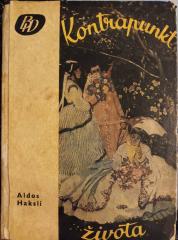
Kontrapunkt života

Kontrapunkt života

Aldous Huxley

Point Counter Point (1928) is Huxley's longest and most complex novel, inspired by musical counterpoint, where the story develops through interwoven plots and parallel plots, switching abruptly between characters and themes.

Svjetlost, 1961.
Serbisch. Latein Schrift. Hardcover.
Das Buch besteht aus zwei Bänden
3,26 - 7,99
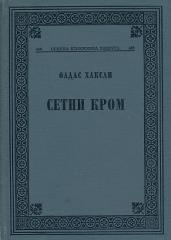
Setni Krom

Setni Krom

Aldous Huxley
Srpska književna zadruga (SKZ), 1974.
Serbisch. Kyrillisch Schrift. Hardcover.
6,82
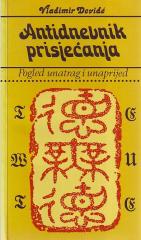
Antidnevnik prisjećanja: Pogled unatrag i unaprijed

Antidnevnik prisjećanja: Pogled unatrag i unaprijed

Vladimir Devidé

Vladimir Devidé, a Croatian mathematician, Japanologist and essayist, creates an intimate, fragmentary autobiography in Anti-Diary of Recollections through around twenty texts – essays, stories, humorous and satirical articles, travelogues, reflections an

Znanje, 1995.
Kroatisch. Latein Schrift. Taschenbuch.
11,26
Od rezignacije do utočišta

Od rezignacije do utočišta

Antun Šundalić
Matica hrvatska, 1999.
Kroatisch. Latein Schrift. Taschenbuch.
4,99
Pjesme i eseji

Pjesme i eseji

Antun Branko Šimić

„Pesme i eseji“ A. B. Šimića je posthumna publikacija koja objedinjuje odabrane pesme i eseje jedne od ključnih ličnosti hrvatskog ekspresionizma. Ovaj izbor njegove poezije i eseja uredila je Vesna Krmpotić.

Matica hrvatska, 1964.
Kroatisch. Latein Schrift. Taschenbuch.
7,96 - 8,32
Nasljednik indijskog cara : Jakša Kušan od 1500. godine pr. Kr. do 1980.

Nasljednik indijskog cara : Jakša Kušan od 1500. godine pr. Kr. do 1980.

Ivan Kušan

Autobiografska proza Ivana Kušana, u kojoj autor priča priču o životu svog oca, Jakše Kušana, iz lične i porodične perspektive. Kroz sećanja Ivana Kušana pratimo Jakšu Kušana u predratnom Sarajevu, ratnom i posleratnom Zagrebu.

Naklada Ljevak, 2000.
Kroatisch. Latein Schrift. Taschenbuch.
4,76