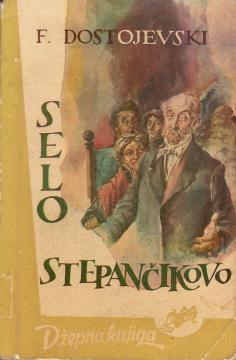
Selo Stepančikovo

Selo Stepančikovo

Fjodor Mihajlovič Dostojevski

"The Village of Stepanchikovo" is a humorous novel by Dostoyevsky, first published in 1859. This novel, which differs from the later, darker works of the author, is a satirical critique of social relations and human weaknesses.

The story is set in the small village of Stepanchikovo, where Colonel Yegor Ilyich Rostanyev manages his estate. After the death of his parents, he finds himself under the strong influence of Foma Fomič Opiskin, a flatterer and manipulator, who uses his intelligence and rhetorical skills to gain power over his household and neighbors.

Rostanjev is a good and noble man, but also weak when it comes to conflicts. Foma Fomič, on the other hand, keeps the entire household under his control, manipulating all the inhabitants of the estate, including Rostanje's despotic mother, servants and guests.

The story gets complicated when Rostanyev invites his nephew, the young intellectual Sergei Alexandrovich, to visit him. Sergei comes with the intention of helping his uncle, but soon finds himself in the vortex of Foma's intrigues. The situation is further complicated because Rostanjev wants to marry a modest girl Nastasja, which Foma opposes, under the pretext of preserving "moral order".

Although "The Village of Stepanchikovo" is less well-known than Dostoevsky's later works, it offers an interesting insight into the author's early ideas about human nature and society. Combining humor and psychological analysis, the novel is a humorous but also a deep story about human weaknesses and interpersonal relationships.

Titel des Originals
Село Степанчиково и его обитатели
Übersetzung
Milan Kašanin
Editor
Risto Trifković
Titelseite
Mirko Stojnić
Maße
16,5 x 11 cm
Seitenzahl
228
Verlag
Svjetlost, Sarajevo, 1962.
 
Latein Schrift. Taschenbuch.
Sprache: Serbisch.

Es werden zwei Exemplare angeboten

Kopiennummer 1

Zustand:Gebraucht, in ausgezeichnetem Zustand
Nachteile/Unannehmlichkeiten:
  • Blago oštećenje korica
Zum Warenkorb hinzugefügt!

Kopiennummer 2

Zustand:Gebraucht, in ausgezeichnetem Zustand
Zum Warenkorb hinzugefügt!
 

Interessieren Sie sich für ein anderes Buch? Sie können das Angebot über unsere Suchmaschine suchen und finden oder Bücher nach Kategorien durchsuchen.

Diese Titel könnten Sie auch interessieren

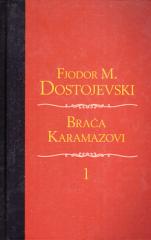
Braća Karamazovi

Braća Karamazovi

Fjodor M. Dostojevski

Braća Karamazovi posljednji je roman ruskoga genija Fjodora Mihajloviča Dostojevskoga, koji je dovršio nepuna tri mjeseca prije smrti.

Globus, 2004.
Kroatisch. Latein Schrift. Hardcover.
16,24
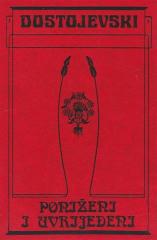
Zločin i kazna

Zločin i kazna

Fjodor Mihajlovič Dostojevski

„Zločin i kazna“ je roman ruskog pisca Fjodora Mihailoviča Dostojevskog, objavljen 1866. godine u časopisu „Ruski glasnik“. Smatra se jednim od najvećih dela ruske književnosti. Radnja se odvija u Sankt Peterburgu sredinom 1860-ih.

Rad, 1988.
Serbisch. Latein Schrift. Hardcover.
7,60
Zločin i kazna

Zločin i kazna

Fjodor M. Dostojevski

Einer der komplexesten Romane der Weltliteratur, der anhand einer Kriminalhandlung Fragen der persönlichen Freiheit, der moralischen Rechtfertigung und der Psychologie der Sünde thematisiert.

Jutarnji list, 2004.
Kroatisch. Latein Schrift. Hardcover.
14,42
Najljepše priče klasične starine 1-2

Najljepše priče klasične starine 1-2

Gustav Schwab
Jutarnji list, 2004.
Kroatisch. Latein Schrift. Taschenbuch.
Das Buch besteht aus zwei Bänden
8,32 - 9,98
Nevidljiva kraljica: Povijesne priče iz bosanske Hrvatske

Nevidljiva kraljica: Povijesne priče iz bosanske Hrvatske

Štefa Jurkić

Invisible Queen: Historical Stories from Bosnian Croatia ist eine Sammlung von sechs historischen Erzählungen, in denen Štefa Jurkić das Leben, den Glauben und die Identität der Kroaten in Bosnien anhand von Ereignissen aus der Vergangenheit schildert.

Matica hrvatska, 1941.
Kroatisch. Latein Schrift. Hardcover.
6,42
Barun Ivica

Barun Ivica

August Šenoa

Baron Ivica depicts the disintegration of a peasant cooperative after the abolition of serfdom. Baron Ivica, a frivolous nobleman, exploits the peasants, leading to their moral and material decline. Šenoa criticizes the transitional society.

Hrvatsko književno društvo Sv. Jeronima, 1932.
Kroatisch. Latein Schrift. Hardcover.
6,34