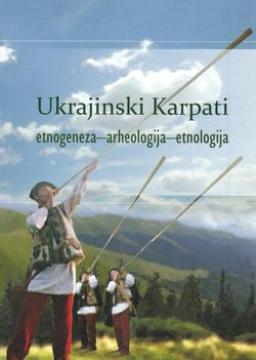
Ukrajinski Karpati: Etnogeneza, arheologija, etnologija
The collection is an interdisciplinary bridge between Ukrainian and Croatian science, encouraging comparative research on Slavic migrations. It presents the Carpathians as a "living archipelago" connecting East and West, important for Croatian ethnogenesi
The collection is the result of cooperation between the Department of Ukrainian Language and Literature, Faculty of Humanities and Social Sciences, University of Zagreb, Institute of Ethnology, National Academy of Sciences of Ukraine in Lviv and Ivan Franko National University in Lviv. It contains translations (from Ukrainian) of works by prominent Ukrainian scholars (ethnologists, archaeologists, anthropologists, historians), student translations from graduate studies in Ukrainian studies, and an introductory study by editor Yevgeny Paschenko, “Getting to Know the Carpathians.”
The goal is an interdisciplinary approach to the Ukrainian (Eastern) Carpathians as a key zone of ethnogenesis of the Eastern Slavs, with an emphasis on connections with Croatian ethnogenesis (White Croats, migrations, comparative approach). The book approaches the problem of the necessity of comparative study of Ukrainian and Croatian material – ethnic, historical, cultural currents of Central and Southeastern Europe.
Main units and topics:
- Ethnogenesis: Proto-Slavic migrations (5th–9th centuries), the role of the Carpathians in the formation of Eastern Slavic tribes (White Croats, Dulebi, Tivertsi), mixing with the indigenous population (Dacians, Celts, Thracian-Dacians, Sarmatians), continuity from Kievan Rus' to the Galicia-Volhynia state. The "Belarusian" question and its role in Balkan migration are discussed in particular.
- Archaeology: Overview of the layers from the Neolithic (Trypil culture), through the Lusatian, Scythian, Chernihiv, Penkiv and Prague cultures to early medieval construction sites (eg Stiljsko - one of the largest in Europe, 8th-10th century, associated with the White Croats). Fortresses, graves, stone sanctuaries ("God's mountain"), continuity of population are analyzed.
- Ethnology: In-depth analysis of the sub-ethnicity of the Ukrainian highlanders – Huculi, Bojki, Lemki (and partly Doljnjaci, Pidhirjaci). Traditional animal husbandry, wooden architecture (churches, houses), folklore (Kolomijka, trembita, polyphonic song), customs (Midsummer Day, Christmas rituals), mythology, demonology, embroidery, carving, Greek Catholic faith are described. Emphasis on the preservation of archaic proto-Slavic elements and identity challenges (Rusinism, deportations of Lemak in 1947).
Key represented authors (according to NSK, KGZ catalog records and related sources):
- Stepan Pavlyuk (ethnologist, Institute of Ethnology NAN of Ukraine) – works on ethnogenesis and ethnology of the Carpathians, sub-ethnic groups (Huculi, Bojki, Lemki).
- Dmytro Vortman (archaeologist) – contributions on archaeological layers, hillforts (e.g. Stiljsko) and early medieval sites.
- Mykola Kosmina (or variants of Kosmyna) – texts on migrations, proto-Slavic cultures and continuity of settlement.
- Yevgeny Paschenko – editor and author of the introductory study “Getting to Know the Carpathians”, and probably some comments/comparative parts on Croatian-Ukrainian relations (White Croats).
Jedan primjerak je u ponudi