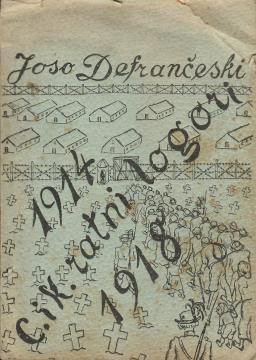
C. i Kr. ratni logori 1914.–1918.
Ein rares Buch
Antiquität

C. i Kr. ratni logori 1914.–1918.

Joso Defrančeski

The first comprehensive account of the suffering of Istrian civilians (mostly women, children and the elderly) in Austro-Hungarian refugee camps during World War I, based on the personal memories of the author from Ližnjan.

Josip (Jose) Defrančeski's book *C. and Kr. war camps 1914–1918. is one of the most important testimonies about the humanitarian catastrophe that befell the population of Southern Istria after Italy entered the war in 1915. The Austro-Hungarian authorities evacuated (or expelled) tens of thousands of civilians — mostly Croats from the Pula and Ližnjan areas — to camps and settlements in Hungary, Moravia, the Czech Republic and Austria. The worst was in the large refugee camp Gmünd in Lower Austria, where thousands died of hunger, typhus, dysentery and other diseases due to catastrophic conditions.

The author Joso Defrančeski (Ližnjan, 1906 – Argentina, mid-1970s) wrote the book based on his own traumatic childhood experience. As a nine-year-old, he was expelled from Ližnjan with his mother, brothers, grandmother and grandfather. In the Gmünd camp, he lost his younger brother Ivica and his grandfather. The book is therefore at the same time a personal memoir and a broader historical documentation of the fate of the Istrian "evacuees". Defrančeski emphasizes that he did not exaggerate anything, but even toned down a lot.

The book represents the first comprehensive presentation of this topic in Croatian (Yugoslav) literature. It later saw an expanded edition (Ližnjan, 2015). The style is direct, emotional and documentary, with many specific names, places and destinies. The book is not only an accusation against the Austro-Hungarian authorities for negligence and inhumane treatment, but also a valuable source for studying the First World War "in the background", the Italianization of Istria and the fate of the Istrian Croats.

Today it is considered a bibliographical rarity. Copies of the first edition from 1937 appear very rarely on the market and are sought after among collectors of Istrian themes, literature about the First World War, and regional history.

Maße
20 x 14 cm
Seitenzahl
200
Verlag
Štamparija Antun Rott, Osijek, 1937.
 
Latein Schrift. Taschenbuch.
Sprache: Kroatisch.

Angeboten wird ein Exemplar

Zustand:Gebraucht, in sehr gutem Zustand
Nachteile/Unannehmlichkeiten:
  • Slight damage to the cover
  • Traces of patina
Zum Warenkorb hinzugefügt!
 

Interessieren Sie sich für ein anderes Buch? Sie können das Angebot über unsere Suchmaschine suchen und finden oder Bücher nach Kategorien durchsuchen.

Diese Titel könnten Sie auch interessieren

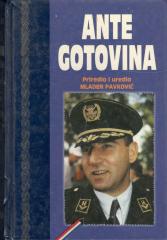
Ante Gotovina

Ante Gotovina

Mladen Pavković

Knjiga se bavi generalom Antom Gotovinom, odnosno optužnicom koja je dignuta protiv njega na Haškom sudu, kao i političkom klimom u Hrvatskoj u vrijeme podizanja optužnice i Gotovinina bijega pred hrvatskim pravosuđem.

Alineja, 2005.
Kroatisch. Latein Schrift. Hardcover.
17,36
Židovski Osijek

Židovski Osijek

Ljiljana Dobrovšak, Andreja Simičić, Davor Špišić, Marina Vinaj, Tomislav Vuković

Brošura je namijenjena nastavnicima, učenicima i svima zainteresiranima za podučavanje tema židovskog naslijeđa, antisemitizma i holokausta.

Nansen dijalog centar, 2020.
Kroatisch. Latein Schrift. Taschenbuch.
4,76
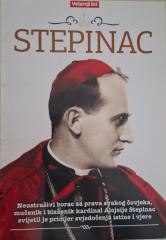
Stepinac

Stepinac

Zvonimir Despot, Jadranka Jureško-Kero, Darko Pavičić, Ljiljana Risek, Silvije Tomašević
Večernji list, 2012.
Kroatisch. Latein Schrift. Taschenbuch.
8,56 - 9,38
Hrvati koji su stvarali Europu

Hrvati koji su stvarali Europu

Ivan Tanta

The book collects short biographies of thirty Croatians who, through their work in various fields of science, art and society, have made a contribution to European history.

Stari grad, 2003.
Kroatisch. Latein Schrift. Hardcover.
6,72 - 6,82
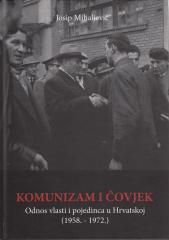
Komunizam i čovjek: Odnos vlasti i pojedinca u Hrvatskoj (1958.–1972.)

Komunizam i čovjek: Odnos vlasti i pojedinca u Hrvatskoj (1958.–1972.)

Josip Mihaljević

Josip Mihaljević's book analyzes the relationship between the government and the individual in communist Croatia (1958–1972), through repressive mechanisms, ideological pressures, and restrictions on personal freedom in the socialist system.

Hrvatski institut za povijest, 2016.
Kroatisch. Latein Schrift. Hardcover.
17,26
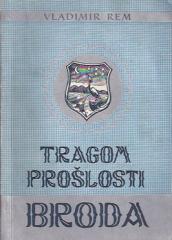
Tragom prošlosti Broda

Tragom prošlosti Broda

Vladimir Rem

A local feuilleton chronicle of Slavonski Brod from Roman times (Marsunija), through Turkish rule, the Military Border and the fortress to the 19th/20th century. A warm, nostalgic account of the history, customs and sights of the town.

Vlastita naklada, 1965.
Kroatisch. Latein Schrift. Taschenbuch.
6,72