Luča mikrokozma
Ein philosophisch-religiöses Gedicht von Petar II. Petrović Njegoš (1845) über die Seele, den Kosmos, den Fall der Engel und das menschliche Schicksal. Der kosmische Flug der Seele und eine biblisch-mythologische Erzählung vom Kampf zwischen Gut und Böse,
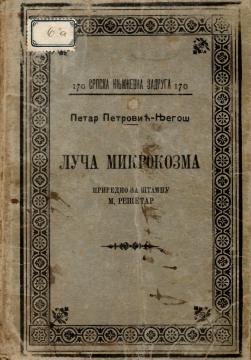
Das Licht des Mikrokosmos von Peter II. Petrović Njegoš (1813–1851) zählt zu den bedeutendsten und philosophischsten Werken der serbischen und südslawischen Literatur. Es erschien ursprünglich 1845 in Belgrad, und die vorliegende Ausgabe von 1923 wurde von dem prominenten Philologen und Linguisten Milan Rešetar (1860–1942) für die Veröffentlichung vorbereitet.
Das Buch enthält Rešetars philologische Abhandlung, ein Wörterbuch seltener Wörter sowie die wichtige Studie „Philosophie im Lichte des Mikrokosmos“ von Branislav Petronijević, einem der führenden serbischen Philosophen seiner Zeit. In seinem Vorwort interpretiert Petronijević Njegoš’ Denken im Kontext von Philosophie, Religion und Metaphysik und hebt die Tiefe des spekulativen Genies des Dichters hervor.
Das Werk ist in Dekametern, in sechs Gesängen, verfasst und Sima Milutinović Sarajlija gewidmet. Genretechnisch gehört es zur romantisch-philosophischen Dichtung mit Elementen kosmischer Vision, Theodizee und mythologisch-religiösem Epos. Die Handlung beginnt mit Widmung und Selbstbetrachtung, gefolgt vom kosmischen Flug der Seele des Dichters (luče) durch die Sphären auf der Suche nach Antworten über Ursprung und Bestimmung des Menschen. Der zweite Teil beschreibt Satans Rebellion gegen Gott, den Fall der Engel und den Sündenfall Adams sowie die Gefangenschaft des Menschen in der materiellen Welt. Njegoš verbindet christliche Tradition (insbesondere das Motiv des gefallenen Engels und der Erbsünde), manichäische dualistische Ideen und romantischen Individualismus zu einer originellen Synthese.
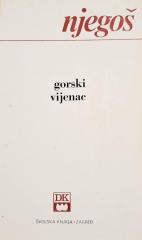
Die zentralen Themen sind: die Unsterblichkeit der Seele, der Kampf zwischen Licht und Dunkelheit, die Willensfreiheit, das Leiden als Folge der Sünde, der Mensch als göttlicher Funke im Staub des Todes und die Suche nach dem Sinn des Universums. Der Stil ist erhaben, bildhaft und metaphysisch dicht, reich an Natursymbolen, Himmelskörpern und biblischen Motiven. Hier erreicht Njegoš den Höhepunkt seiner religionsphilosophischen Dichtung, tiefer und spekulativer als in Gorski vijenc.
Rešetars Ausgabe von 1923 ist von Bedeutung, da sie den Text in der Zwischenkriegszeit mit philologischer Präzision und Petronijevićs philosophischem Kommentar für ein breiteres Publikum standardisierte. Sie trug zur Kanonisierung des Werkes als Höhepunkt von Njegoš’ Gedankenlyrik bei. Luča mikrokosma ist ein Schlüsselwerk, um Njegoš nicht nur als Dichter und Bischof, sondern auch als originellen Denker zu verstehen, der orthodoxe Spiritualität, westliche Philosophie und romantisches Genie miteinander verband.
Angeboten wird ein Exemplar
- Abgenutzte Bezüge
- Bibliotheksstempel