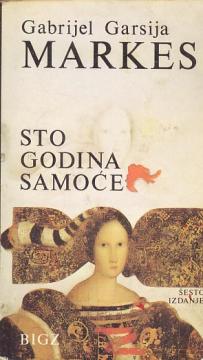
Sto godina samoće

Sto godina samoće

Gabriel Garcia Marquez

A chronicle of seven generations of the Buendía family in the isolated village of Macondo. Through the family's rise and fall, Márquez portrays the destiny of Latin America, intertwining reality, magic, and inevitable solitude.

One Hundred Years of Solitude (1967) is a masterpiece by the Colombian Nobel laureate Gabriel García Márquez and a seminal novel of magical realism. The plot follows the Buendía family over the course of a century in the fictional village of Macondo, founded amidst untouched wilderness by the patriarch José Arcadio Buendía and his wife Úrsula Iguarán. Initially, the village exists in a state of mythical peace, but over time it is invaded by wars, modern technology, exploitative foreign companies, and political conflicts, thereby mirroring the turbulent history of all Latin America. The driving force of the narrative is the cyclical nature of history: generations of Buendías repeat the same mistakes, bear the same names, and succumb to the weight of their own passions, obsessions, and fatal solitude. Family members—from the bellicose Colonel Aureliano Buendía to the final descendants—vainly seek intimacy yet remain trapped within their own mental and emotional prisons. In the novel, fantastic elements—such as ascending into the sky, years-long rains, and prophecy—are portrayed as entirely ordinary parts of daily life. The story reaches its climax when the last Buendía deciphers the mysterious writings of the Gypsy sage Melquíades. At the moment he realizes the family's fate was written long ago, a devastating hurricane wipes Macondo off the face of the earth, confirming that lineages condemned to one hundred years of solitude do not get a second chance on earth.

Titel des Originals
Cien anos de soledad
Übersetzung
Jasna Mimica Popović
Illustrationen
Aleksandar Cvetinovski
Maße
18 x 10,5 cm
Seitenzahl
341
Verlag
BIGZ, Beograd, 1985.
 
Auflage: 50.000 Exemplare
 
Latein Schrift. Taschenbuch.
Sprache: Serbisch.

Angeboten wird ein Exemplar

Zustand:Gebraucht, in ausgezeichnetem Zustand
Reduzierter Preis: 7,945,96
Der Rabatt von 25 % gilt bis zum 19.09.2026 23:59 Uhr
Zum Warenkorb hinzugefügt!
 

Interessieren Sie sich für ein anderes Buch? Sie können das Angebot über unsere Suchmaschine suchen und finden oder Bücher nach Kategorien durchsuchen.

Diese Titel könnten Sie auch interessieren

Neverovatna i tužna istorija nevine Erndire i njene bezdušne babe: sedam priča

Neverovatna i tužna istorija nevine Erndire i njene bezdušne babe: sedam priča

Gabriel Garcia Marquez

Ni jedan od tekstova koji čine ovu knjigu nisu bili zamišljeni da ugledaju svjetlost u sadašnjem obliku. Priče polaze od projekta knjige pripovjedaka za djecu koji nije ostvaren i kraće novele “Istorija Erendire”, nastale iz epizode “Sto godina samoće”.

Dečje novine, 1979.
Kroatisch. Latein Schrift. Taschenbuch.
2,99
Pukovniku nema tko da piše

Pukovniku nema tko da piše

Gabriel Garcia Marquez

Pukovniku nema ko da piše Gabrijela Garsije Markesa je priča o starom pukovniku koji godinama čeka obećanu državnu penziju. U siromaštvu i neizvesnosti, on odbija da izgubi nadu.

Znanje, 1982.
Kroatisch. Latein Schrift. Taschenbuch.
4,86
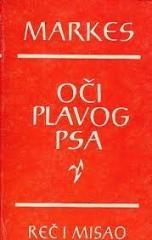
Oči plavog psa

Oči plavog psa

Gabriel Garcia Marquez

Die Geschichte handelt von einem Mann und einer Frau, die einander in gemeinsamen Träumen lieben. Trotz des Codes „Augen eines blauen Hundes“, den sie verwenden, um im Wachleben zueinanderzufinden, vergisst der Mann nach dem Erwachen alles, was sie in ewi

Izdavačko preduzeće "Rad", 1979.
Serbisch. Latein Schrift. Taschenbuch.
3,97 - 3,98
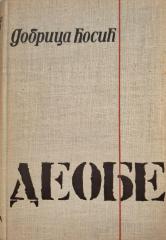
Deobe 1-3

Deobe 1-3

Dobrica Ćosić

Dieses Werk, das in diesem Jahr mit dem NIN-Preis ausgezeichnet wurde, gilt als eines der bedeutendsten der serbischen Literatur nach dem Zweiten Weltkrieg.

Prosveta, 1961.
Serbisch. Kyrillisch Schrift. Fester Einband mit Schutzumschlag.
Das Buch besteht aus drei Bänden
11,42
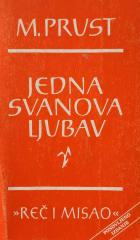
Jedna Svanova ljubav

Jedna Svanova ljubav

Marcel Proust
Rad, 1984.
Serbisch. Latein Schrift. Taschenbuch.
2,98
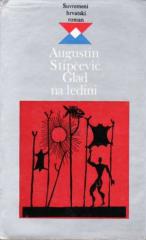
Glad na ledini

Glad na ledini

Agustin Stipčević
Zora, 1968.
Kroatisch. Latein Schrift. Fester Einband mit Schutzumschlag.
5,22