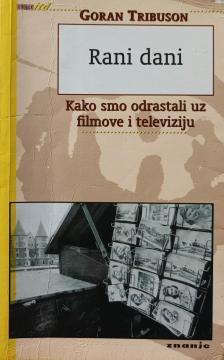
Rani dani - Kako smo odrastali uz filmove i televiziju
U svojoj autobiografskoj prozi, „Rani dani“ (1997), Goran Tribuson evocira detinjstvo i ranu odraslu dob u Bjelovaru kroz prizmu filma i televizije. Izuzetno humoristična priča o običnom životu šezdesetih godina 20. veka.
Knjiga, podeljena u četiri tematska dela, nije samo nostalgičan pogled na pop kulturu socijalističke Jugoslavije, već i intimna ispovest o porodici, prijateljima i društvenim promenama posle rata.
Prvi deo, Miris Lisola, vodi nas u bioskope Gorica i Partizan: škripava sedišta, miris dezinfekcionog sredstva, posteri vesterna sa Džonom Vejnom (Prohujalo sa vihorom) i Garijem Kuperom, mačevaočki filmovi, Tarzan i italijanski spektakli sa Stivom Rivsom kao Herkulom. Majka Nevenka i baka Milica vode malog Gorana, koji brzo prepoznaje žanrove i mašta o avanturama, dok se kasnije upušta u filmsko novinarstvo, posećujući Zagreb i Dubrava film, gradeći sopstveni projektor za slajdove. Šezdesetih godina prelazi na avangardu Godara, a sa video bioskopom postaje retkost.
Drugi deo, Slane semenke, slavi gurmanske rituale: pod pun slanih semenki bundeve, pečenih kestena, halve, sladoleda, bombona i žvakaćih guma, uz pivo ili Koktu – simbole društvenog povezivanja u mraku sale, gde se filmovi spajaju sa dečačkim uzbuđenjem.
Treći, „Svinjsko uvo“, prati porodičnu televizijsku istoriju: otac Milan, majstor, kupuje prvi „Favorit“ 1959. godine, prvi na ulici, privlačeći komšije u biblioteku. Program je politizovan – partizanski filmovi, reprize, dosadni kabarei – ali sadrži i serije poput „Gradić Pejton“ i „Opasnost je moja stvar“. Kvarovi, popravke i gledanje bez daljinskog upravljača postaju porodični rituali; autor piše scenarije za dečje emisije.
Četvrti, „Moj cinični prijatelj“, razmišlja o ulozi televizije: od korisne za čitanje i globalne kanale do paradoksa (sport kao zdravlje, ali sedentarni život), pa čak i leka za nesanicu. Tribuson se izvinjava zbog ličnih detalja – smrti majke 1986. godine, očeve 1997. godine, života sestre – ali ističe kako mediji oblikuju generaciju: od filmskih mitova do domaće intimnosti.
Sa humorom i sentimentalnošću, knjiga je vremenska kapsula za one koji su odrasli uz „cvetajuće ruže“ na ekranu, kritikujući i slaveći kako su film i televizija zamenili stvarni svet avanturom i iluzijom.
Angeboten wird ein Exemplar