Kršćanstvo prije Krista?

Kršćanstvo prije Krista?

Eugen Werber

"Qumran writings" or "Dead Sea Scrolls" represent one of the greatest discoveries of the 20th century, which lead to the revision of some overly simplified atheistic understandings.

In the spring of 1947, an incredible discovery took place in the area of ​​Qumran (on the northwestern shore of the Dead Sea). As in one of the Eastern stories, a young shepherd, looking for sheep, came to the entrance to an unknown cave. When his eyes adjusted to the darkness, he realized that there were carefully arranged jars in front of him. The first thing that came to his mind was that there might be a hidden treasure in them, gold that would ensure a comfortable future for him. But after he opened some of the jars, his disappointment was endless. None of the great wealth he dreamed of, just old writings full of dust. It was a historic discovery that would soon cause a world sensation and start many controversies. The first seven scrolls found by the shepherds soon ended up at the Hebrew University in Jerusalem, and excited scientists from all over the world flocked to Qumran and began exploring the other surrounding caves.

After the Qumran commentaries on the book of the prophet Habakkuk and after the Rulebook of Communion, it is difficult to claim that the gospels are a mere fabrication from a historical point of view and that there never was such a historical figure as Jesus Christ, because there are no reliable documents from that time. Today we have undoubtedly authentic documents that as early as the first century before our era, the leaders of a small sect called the Teachers of Righteousness lived on the shores of the Dead Sea, who had their own special ideas about God and religion, and were constantly in conflict with the central institutions of the Jewish faith in Jerusalem . Is it difficult to assume that one of those Teachers, or perhaps one of their successors, came to Jerusalem itself to experience something of the fate described in the Gospels?

Editor
Slavko Goldstein
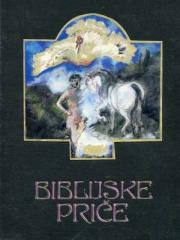
Titelseite
Josip Vaništa
Maße
20 x 14 cm
Seitenzahl
238
Verlag
Liber, Rijeka, 1972.
 
Latein Schrift. Fester Einband mit Schutzumschlag.
Sprache: Kroatisch.

Angeboten wird ein Exemplar

Zustand:Gebraucht, in ausgezeichnetem Zustand
Zum Warenkorb hinzugefügt!
 

Interessieren Sie sich für ein anderes Buch? Sie können das Angebot über unsere Suchmaschine suchen und finden oder Bücher nach Kategorien durchsuchen.

Diese Titel könnten Sie auch interessieren

Biblijske priče

Biblijske priče

Eugen Werber
Cankarjeva založba, 1988.
Kroatisch. Latein Schrift. Hardcover.
9,99
Poruka nade

Poruka nade

Ellen Gould White

Jeder von uns kann im Leben an einen Punkt gelangen, an dem wir Hoffnung brauchen.

Znaci vremena, 2017.
Kroatisch. Latein Schrift. Taschenbuch.
3,98
Uvod u kršćanstvo: predavanja o apostolskom vjerovanju

Uvod u kršćanstvo: predavanja o apostolskom vjerovanju

Joseph Ratzinger

Joseph Ratzinger, der spätere Papst Benedikt XVI., hielt 1968 an der Universität Tübingen eine Vorlesungsreihe, die zum Bestseller „Einführung in das Christentum – eine tiefgründige Interpretation des apostolischen Glaubens in der Krise der Neuzeit“ wurde

Kršćanska sadašnjost, 1972.
Kroatisch. Latein Schrift. Taschenbuch.
11,34
Isusov spasonosni nauk

Isusov spasonosni nauk

Biblijske priče za decu

24 sata.
Kroatisch. Latein Schrift. Taschenbuch.
2,48
Bog nas ljubi: Misli i govori Arškog župnika

Bog nas ljubi: Misli i govori Arškog župnika

Jean-Marie Vianney

Džon Meri Vijani (1786-1859), koji će ući u istoriju kao parohijski sveštenik iz Arsa, živeo je i radio tokom velike Francuske revolucije, teških događaja posebno za Crkvu.

Simposion, 2009.
Kroatisch. Latein Schrift. Taschenbuch.
5,38
Upoznajmo Bibliju

Upoznajmo Bibliju

P. Betrand

Uvod u Bibliju za mlade

Karitativni fond UPT, 1995.
Kroatisch. Latein Schrift. Taschenbuch.
2,43