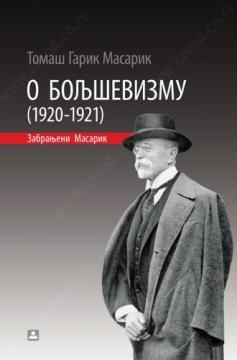
O boljševizmu (1920-1921) - zabranjeni Masarik

O boljševizmu (1920-1921) - zabranjeni Masarik

Tomáš G. Masaryk

In this edition, translated by dr. Aleksandar Ilić, there are texts of the first Czechoslovak president in which he timely criticizes Marx, Engels and Lenin, and actually goes on to criticize imperialism in general.

Tomas Masaryk (1850-1937) was the first president of the Czechoslovak Republic, but in addition to his political and statesmanship successes, he also achieved notable results as a philosopher and political theorist. As a philosopher, he was a rationalist and humanist, religious, but also anticlerical, an opponent of conservatism, Marxism, communism and the Soviet Union. In real politics, he was a supporter of Anglo-Saxon democracy, quiet and hard work and passive political resistance. During the annexation crisis of 1909, the "father of Czechoslovakia" defended the rights of Serbs and Croats, and it was largely due to his merit that Emperor Franz Joseph was forced to pardon and release Serbs accused of treason against the Habsburg Monarchy, in a staged Zagreb trial, during which serious accusations were also made against the Kingdom of Serbia.

Masaryk's theoretical outlook and practical political experience led him to the conclusion that the democratic nation-state is the most familiar form of social organization and a relatively reliable means both for the development of democracy in the country and for the defense of identity and independence, especially of small nations. In previous decades, our public, for obvious reasons, knew little about the political ideas and activities of Tomasz Masaryk, especially about his criticism of left-wing totalitarianism. They arose in significantly different circumstances than today, which seemed to be overlooked by Aleksandr Solzhenitsyn, also one of the most significant fighters against Stalinism, who said towards the end of his life: I thought we were fighting Stalinism, but it seems that we are fighting Russia.

Titel des Originals
O bolševictvi
Übersetzung
Aleksandar Ilić
Editor
Maja Lalević
Titelseite
Aida Spasić
Maße
20 x 13,5 cm
Seitenzahl
199
Verlag
Zavod za udžbenike i nastavna sredstva, Beograd, 2014.
 
Kyrillisch Schrift. Taschenbuch.
Sprache: Serbisch.
ISBN
860-0-26203-589-9

Angeboten wird ein Exemplar

Zustand:Ungebraucht
Zum Warenkorb hinzugefügt!
 

Interessieren Sie sich für ein anderes Buch? Sie können das Angebot über unsere Suchmaschine suchen und finden oder Bücher nach Kategorien durchsuchen.

Diese Titel könnten Sie auch interessieren

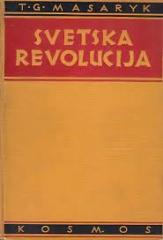
Svetska revolucija

Svetska revolucija

Tomáš G. Masaryk
Kosmos, 1935.
Serbisch. Latein Schrift. Hardcover.
9,99
Dijalog povjesničara-istoričara 10/2

Dijalog povjesničara-istoričara 10/2

Miroslav Akmadža, Bojan B. Dimitrijević, Vladimir Geiger, Igor Graovac, Filip Škiljan, Marica Kar...

Izlaganja na temu druge/socijalističke Jugoslavije 1945.-1991.

Zaklada Friedrich Naumann, 2008.
Kroatisch. Latein Schrift. Taschenbuch.
6,99
Praško proljeće

Praško proljeće

Jiri Pelikan

Knjiga Praško proleće češkog novinara i političara Jiržija Pelikana predstavlja lično svedočanstvo o događajima koji su obeležili Čehoslovačku 1968. godine.

Globus, 1982.
Kroatisch. Latein Schrift. Fester Einband mit Schutzumschlag.
5,68 - 6,34
Posljednji dani Hitlera

Posljednji dani Hitlera

Hugh Redwald Trevor-Roper

Studija koja rekonstruiše događaje u Hitlerovom bunkeru. Autor, britanski istoričar i obaveštajac, dobio je zadatak da istraži okolnosti Hitlerove smrti, razotkrivajući propagandu i glasine koje su kružile nakon pada Trećeg rajha.

Zora, 1951.
Kroatisch. Latein Schrift. Taschenbuch mit Einband.
7,56 - 11,26
Buharinove posljednje godine

Buharinove posljednje godine

Roj Medvedev

U svojoj knjizi Buharinove poslednje godine, Roj Medvedev rekonstruiše tragičnu sudbinu Nikolaja Buharina, jednog od najistaknutijih boljševičkih intelektualaca i političkih lidera, koji je postao žrtva Staljinovih čistki.

Globus, 1980.
Kroatisch. Latein Schrift. Fester Einband mit Schutzumschlag.
4,32 - 5,56