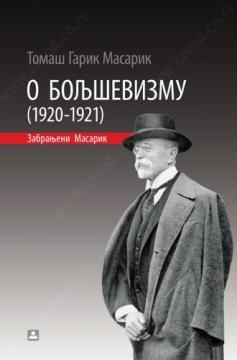
O boljševizmu (1920-1921) - zabranjeni Masarik

O boljševizmu (1920-1921) - zabranjeni Masarik

Tomáš G. Masaryk

In this edition, translated by dr. Aleksandar Ilić, there are texts of the first Czechoslovak president in which he timely criticizes Marx, Engels and Lenin, and actually goes on to criticize imperialism in general.

Tomas Masaryk (1850-1937) was the first president of the Czechoslovak Republic, but in addition to his political and statesmanship successes, he also achieved notable results as a philosopher and political theorist. As a philosopher, he was a rationalist and humanist, religious, but also anticlerical, an opponent of conservatism, Marxism, communism and the Soviet Union. In real politics, he was a supporter of Anglo-Saxon democracy, quiet and hard work and passive political resistance. During the annexation crisis of 1909, the "father of Czechoslovakia" defended the rights of Serbs and Croats, and it was largely due to his merit that Emperor Franz Joseph was forced to pardon and release Serbs accused of treason against the Habsburg Monarchy, in a staged Zagreb trial, during which serious accusations were also made against the Kingdom of Serbia.

Masaryk's theoretical outlook and practical political experience led him to the conclusion that the democratic nation-state is the most familiar form of social organization and a relatively reliable means both for the development of democracy in the country and for the defense of identity and independence, especially of small nations. In previous decades, our public, for obvious reasons, knew little about the political ideas and activities of Tomasz Masaryk, especially about his criticism of left-wing totalitarianism. They arose in significantly different circumstances than today, which seemed to be overlooked by Aleksandr Solzhenitsyn, also one of the most significant fighters against Stalinism, who said towards the end of his life: I thought we were fighting Stalinism, but it seems that we are fighting Russia.

Naslov originala
O bolševictvi
Prevod
Aleksandar Ilić
Urednik
Maja Lalević
Naslovnica
Aida Spasić
Dimenzije
20 x 13,5 cm
Broj strana
199
Izdavač
Zavod za udžbenike i nastavna sredstva, Beograd, 2014.
 
Ćirilica. Broširano.
Jezik: Srpski.
ISBN
860-0-26203-589-9

Jedan primerak je u ponudi

Stanje:Nekorišćeno
Dodato u korpu!
 

Zanima Vas i neka druga knjiga? Možete pretražiti našu ponudu pomoću pretrage ili prelistati knjige po kategorijama.

Možda će Vas zanimati i ovi naslovi

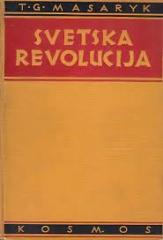
Svetska revolucija

Svetska revolucija

Tomáš G. Masaryk
Kosmos, 1935.
Srpski. Latinica. Tvrde korice.
9,99
Vladavina Hrvatsko-srpske koalicije : 1906-1907

Vladavina Hrvatsko-srpske koalicije : 1906-1907

Mirjana Gross
Institut društvenih nauka, 1960.
Hrvatski. Latinica. Broširano.
17,50
Sudbonosni podvig Jugoslavije: Podsjećanje na historijsko NE staljinizmu, događaj koji je opredijelio budućnost Jugoslavije

Sudbonosni podvig Jugoslavije: Podsjećanje na historijsko NE staljinizmu, događaj koji je opredijelio budućnost Jugoslavije

Raif Dizdarević

Das Buch von Raif Dizdarević, einem der letzten noch lebenden Akteure der jugoslawischen Diplomatie, präsentiert seine Rekonstruktion des schicksalhaftesten Moments im Nachkriegsjugoslawien – den Bruch mit Stalin und dem Informbüro in den Jahren 1948–1953

Udruženje za modernu historiju (UMHIS), 2018.
Hrvatski. Latinica. Broširano.
23,58
Povijest #19: Suvremeno doba (1985.-2007.)

Povijest #19: Suvremeno doba (1985.-2007.)

Europapress holding, 2008.
Hrvatski. Latinica. Tvrde korice.
9,58
Bormannova braća idu dalje

Bormannova braća idu dalje

William Stevenson

Das Buch enthüllt das geheime Netzwerk, durch das Martin Bormann, Hitlers Schatzmeister, nach dem Fall des Dritten Reiches das Überleben der Nazi-Macht und des Nazi-Kapitals sicherstellte.

NIŠRO "Vjesnik", 1977.
Hrvatski. Latinica. Tvrde korice.
6,54