Nacionalni testament kralja Aleksandra I
Ein rares Buch

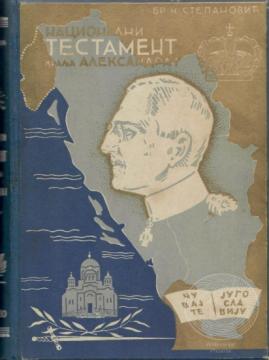
Nacionalni testament kralja Aleksandra I

Branislav M. Stepanović

The author presents the political and ideological legacy of King Aleksandar I Karađorđević the Unifier. The book, published immediately after the king's death, is an attempt to preserve and transmit his political ideals to future generations.

King Alexander I was a key figure in the creation of the Kingdom of Serbs, Croats and Slovenes in 1918, and later the Kingdom of Yugoslavia. His vision was to build a unified Yugoslav nation through a policy of "integral Yugoslavism", which sought to overcome ethnic and political divisions within the state. By introducing the January 6th dictatorship in 1929, he dissolved the parliament, banned political parties and assumed absolute power, believing that this was necessary to preserve the unity and stability of the state.

Stepanović's work describes in detail the king's internal struggle, his motives and disappointments, especially in relation to the failure of the policy of Yugoslav unity. The book also presents the king as a tragic figure, whose death in an assassination in Marseille in 1934 symbolically marked the end of an era and the beginning of new challenges for Yugoslavia.

The National Testament of King Alexander I is not only a biography but also a political manifesto that provides insight into the complex processes of building a modern Yugoslav state and the dilemmas it faced.

Illustrationen
Debenjak i Šenšin
Titelseite
Branislav M. Stepanović
Maße
24 x 18 cm
Seitenzahl
397
Verlag
Jugoslovenska biblioteka "Bratstvo", Beograd, 1936.
 
Kyrillisch Schrift. Hardcover.
Sprache: Serbisch.

Angeboten wird ein Exemplar

Zustand:Gebraucht, in sehr gutem Zustand
Nachteile/Unannehmlichkeiten:
  • Damaged back
Zum Warenkorb hinzugefügt!
 

Interessieren Sie sich für ein anderes Buch? Sie können das Angebot über unsere Suchmaschine suchen und finden oder Bücher nach Kategorien durchsuchen.

Diese Titel könnten Sie auch interessieren

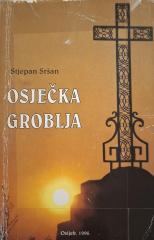
Osječka groblja

Osječka groblja

Stjepan Sršan

The book is deeply rooted in the local history and culture of Osijek, with an emphasis on cemetery motifs that serve as a metaphor for memory, death, and disappearance.

Povijesni arhiv u Osijeku, 1996.
Kroatisch. Latein Schrift. Taschenbuch.
5,26
Zaraćeno poraće: Konfliktni i konkurentski narativi o stradanju i iseljavanju Talijana Istre

Zaraćeno poraće: Konfliktni i konkurentski narativi o stradanju i iseljavanju Talijana Istre

Franko Dota

The book analyzes how conflicting historical narratives about the suffering and mass emigration of Italians from Istria and Rijeka developed in Croatia and Italy after World War II (1943–1956), debunking myths and encouraging an empathetic approach to the

Srednja Europa, 2010.
Kroatisch. Latein Schrift. Taschenbuch.
11,329,06
Izabrani radovi

Izabrani radovi

Ljubo Boban

Selected Works of Academician Ljubo Boban (2022) brings together key texts on contemporary Croatian history of the 20th century. The foreword by Damir Agičić highlights Boban's methodological rigor and objectivity in researching sensitive topics.

Srednja Europa, 2022.
Kroatisch. Latein Schrift. Hardcover.
24,52
Glazbeni život Koprivnice

Glazbeni život Koprivnice

Dragutin Feletar

It is a work that combines historical research, musicological analysis, and local cultural chronicle.

Muzej grada Koprivnice, 1977.
Kroatisch. Latein Schrift. Taschenbuch.
10,628,50
Anđelko Mijatović: Bleiburška tragedija i križni put hrvatskoga naroda godine 1945.

Anđelko Mijatović: Bleiburška tragedija i križni put hrvatskoga naroda godine 1945.

Anđelko Mijatović

The Bleiburg Tragedy and the Way of the Cross of the Croatian People in 1945 is a historical-documentary work by Croatian historian and university professor Anđelko Mijatović.

HSK, 2007.
Kroatisch. Latein Schrift. Taschenbuch.
6,62