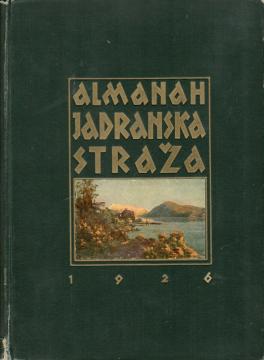
Almanah Jadranske straže za 1926. godinu
Der Almanach der Adriatischen Garde von 1926 enthält Texte über die Adria von 1915 bis 1925, Kriegserfahrungen, die historische Rolle der Armee, einen königlichen Besuch an der Küste sowie Studien zu Tomislav und kroatischen Denkmälern. Die Sammlung biete
Der Adriatische Garde-Almanach von 1926 ist eine repräsentative Jahrespublikation einer der wichtigsten Organisationen der Zwischenkriegszeit, die sich der Förderung der kulturellen, historischen und politischen Bedeutung der Adria für den damaligen Staat widmete. Der Almanach vereint Prosa, historische Essays, Reiseberichte, Kriegsberichte und Gedichte führender Autoren aus Split, Zagreb, Belgrad und anderen Städten und bietet so einen umfassenden Überblick über die Ereignisse, Ideen und Emotionen, die die östliche Adria vom Ersten Weltkrieg bis Mitte der 1920er-Jahre prägten.
Der einleitende Teil enthält eine Widmung an Prinz Petar, ein Vorwort von Juraj Biankini und einen Abschnitt über Gedenkstätten, die den thematischen Rahmen des Buches bilden – die Adria als Symbol der staatlichen Einheit, des historischen Erbes und der Kriegsopfer. Der erste große Abschnitt, „Weiße Adler an der Adria“, enthält Zeugnisse des albanischen Golgatha, der Prüfungen der serbischen Armee, der Ankunft der Truppen an der Adria sowie poetische und prosaische Reflexionen über die Kriegsopfer. Die Werke von Živko Devčev, General Mile J. Nikolajević, Stjepan Roca und anderen bieten eine eindrucksvolle Mischung aus persönlicher Erfahrung und historischem Dokument.
Der zweite Abschnitt, „Der historische Besuch Ihrer Majestäten des Königs und der Königin an unserem befreiten Meer“, beschreibt den königlichen Besuch an der dalmatinischen Küste nach der Wiedervereinigung. Grga Novak, Jerko Čulić, Stanislav Krakov und Dr. J. S. Grujić präsentieren die historische Symbolik der Begegnung der Monarchie mit dem „befreiten Meer“ und betonen die erneuerten Verbindungen zwischen dem Landesinneren und den Städten an der Adria. Vladimir Nazors Gedicht schlägt einen emotionalen Ton an und verknüpft kulturelle Tradition mit der sich neu entwickelnden politischen Situation.
Der dritte Abschnitt, „Historische Tage an der Adria 1925“, enthält Arbeiten von Frano Bulić über König Tomislav und von Lovro Katić über die historischen Denkmäler von Split und Knin. Diese Texte verdeutlichen die Bedeutung der kroatischen Präsenz an der Ostküste der Adria und liefern eine archäologisch-historische Grundlage, die die zeitgenössischen politischen Narrative ergänzt.
Aufgrund der Vielfalt der Autoren, des dokumentarischen Charakters und der Fülle an kulturellen und historischen Themen ist der Almanach eine wertvolle Quelle für die Erforschung der Zwischenkriegszeit, der Beziehungen zur Adria und des intellektuellen und politischen Klimas der 1920er Jahre.
Angeboten wird ein Exemplar
- Leichte Beschädigung der Abdeckung