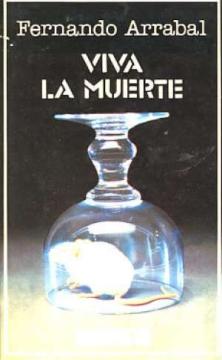
Viva la muerte: Baal babilonski

Viva la muerte: Baal babilonski

Fernando Arrabal

A sick young man recapitulates his upbringing in clerical-fascist Spain through memories and visions. This autobiographical novel served as a direct template for Arrabal's cult film Viva la muerte.

Viva la muerte: Baal Babylone (Baal Babylone, 1959) is an autobiographical novel by Fernando Arrabal, written in the form of an interrupted inner monologue. The protagonist, confined to a hospital bed, sank into memories of his childhood marked by the Spanish Civil War. Through fragments of memories, letters and feverish visions, the boy tries to fathom the fate of his anti-fascist father, who was reported to the clero-fascist regime by his own fanatically religious wife.

It was this novel that served as the main literary template according to which Arrabal directed his famous film debut Viva la muerte in 1971.

With a name that evokes ancient deities and biblical Babylon, the author describes the oppressive and morally depraved world in which he grew up. Applying the aesthetic principles of his Théâtre Panique (Théâtre Panique), Arrabal interweaves children's naivety, dark eroticism, dark humor, sacred iconography and grotesque violence. The novel provides a poignant analysis of a child's psyche torn between the desire for a mother's love and abhorrence of her betrayal, revealing how ideological fanaticism destroys the most intimate family relationships.

Titel des Originals
Baal Babylone
Übersetzung
Ljiljanka Lovrinčević
Editor
Zdravko Židovec
Illustrationen
Petar Dabac
Titelseite
Nenad Dogan
Maße
20 x 13 cm
Seitenzahl
166
Verlag
August Cesarec, Zagreb, 1981.
 
Latein Schrift. Fester Einband mit Schutzumschlag.
Sprache: Kroatisch.

Es werden zwei Exemplare angeboten

Kopiennummer 1

Zustand:Gebraucht, in ausgezeichnetem Zustand
Zum Warenkorb hinzugefügt!

Kopiennummer 2

Zustand:Gebraucht, in gutem Zustand (Gebrauchsspuren)
Nachteile/Unannehmlichkeiten:
  • Pečat biblioteke
  • Nedostaje omot
Reduzierter Preis: 3,992,66
Der Rabatt von 33 % gilt bis zum 31.12.2026 23:59 Uhr
Zum Warenkorb hinzugefügt!
 

Interessieren Sie sich für ein anderes Buch? Sie können das Angebot über unsere Suchmaschine suchen und finden oder Bücher nach Kategorien durchsuchen.

Diese Titel könnten Sie auch interessieren

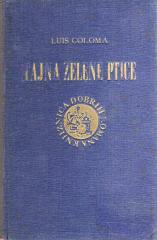
Tajna zelene ptice

Tajna zelene ptice

Luis Coloma

Tajna zelene ptice (1910) je roman španskog pisca i jezuite Luisa Kolome, autora poznatog i po priči o Ratonsitu Perezu, o mladiću iz španske aristokratske porodice koji je odrastao bez majke pod uticajem dominantne maćehe.

Hrvatsko književno društvo Sv. Jeronima, 1928.
Kroatisch. Latein Schrift. Hardcover.
4,72
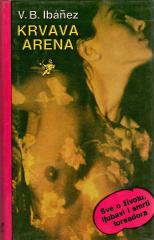
Krvava arena

Krvava arena

Vicente Blasco Ibanez

„Krvava arena“ (1908) je naturalistički roman o usponu i padu borca s bikovima Huana Galjarda. Siromašni mladić postaje poznati matador, ali ga uništavaju ljubav, porok, strah i tragedije u areni – kritika španske borbe s bikovima i društva.

Naprijed, 1984.
Kroatisch. Latein Schrift. Fester Einband mit Schutzumschlag.
4,76
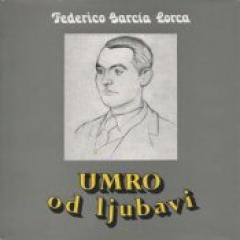
Umro od ljubavi

Umro od ljubavi

Federico García Lorca
Nakladni zavod Matice hrvatske, 1984.
Kroatisch. Latein Schrift. Fester Einband mit Schutzumschlag.
11,48
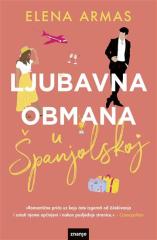
Ljubavna obmana u Španjolskoj

Ljubavna obmana u Španjolskoj

Elena Armas

Elena Armas ist eine spanische Schriftstellerin, eine selbstironische und hoffnungslose Romantikerin und, sehr zum Entsetzen von Herrn B., eine stolze Büchersammlerin. Sie ist die Autorin des Bestsellers Love Deception in Spanien und seiner Fortsetzung Th

Znanje, 2022.
Kroatisch. Latein Schrift. Taschenbuch.
12,529,39 - 14,56
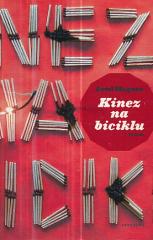
Kinez na biciklu

Kinez na biciklu

Ariel Magnus

„Der Chinese auf dem Fahrrad“ ist ein humorvoller Roman, der den Leser durch die seltsame Welt von Chinatown in Buenos Aires führt.

Fraktura, 2010.
Kroatisch. Latein Schrift. Taschenbuch.
12,98
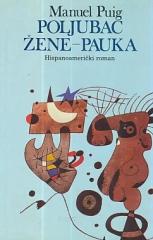
Poljubac žene-pauka

Poljubac žene-pauka

Manuel Puig

Das Buch, das in Argentinien von 1976 bis 1983 aufgrund seiner politischen und sozialen Themen verboten war, gilt als Puigs erfolgreichstes Werk. Es wurde 1985 verfilmt, als Musical und als Bühnenstück adaptiert.

Prosveta, 1985.
Serbisch. Latein Schrift. Fester Einband mit Schutzumschlag.
4,84