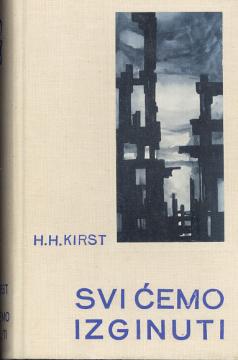
Svi ćemo izginuti

Svi ćemo izginuti

Hans Hellmut Kirst

We Shall All Perish (1957) is a cataclysmic novel by Hans Hellmut Kirst, a famous German writer who became famous for his war trilogy “08/15.” It is a realistic, documentary-style depiction of the outbreak of World War III and a nuclear holocaust.

The plot begins with riots in Poland that quickly spread to East Germany. Although politicians and military commanders on both sides of the Iron Curtain try to calm the situation, events get out of control. The chain reaction – demonstrations, interventions, mobilizations, incidents – escalates with incredible speed. In just six days, Europe sinks into total war, and the final blow of atomic weapons occurs in just 24 hours. The novel ends with complete destruction – “no one will escape”.

Kirst presents events through the perspectives of different characters – politicians, soldiers, civilians, the rich, artists and ordinary people – thus creating a mosaic of European society on the verge of collapse. Particularly impressive is the motif of two young people in love (a boy from West Germany and a girl from East Germany) who are constantly looking for each other and finally meet at the very moment when an atomic explosion turns everything to ashes. There are no heroes, no winners, no redemption – only the senseless destruction of everything that humanity has built for centuries.

The book was written in the atmosphere of Cold War tension of the 1950s, with the advice of military and scientific experts, and it seems frighteningly convincing. Kirst offers not only fiction, but also a warning: war can start almost by accident, and nuclear weapons do not choose sides. He criticizes the helplessness of political and military elites, the meaninglessness of ideological divisions and human shortsightedness.

The style is at times reporter-like and documentary - with proclamations, orders and military reports - which gives the novel credibility, but sometimes comes at the expense of the depth of the characters. Despite this, We Shall All Perish remains a powerful and poignant appeal against nuclear war, one of the most memorable European novels about the atomic apocalypse of the 20th century.

Titel des Originals
Keiner kommt davon
Übersetzung
Irena Golob, Zvonimir Golob
Titelseite
Nenadović - Sakolić
Maße
20 x 13 cm
Seitenzahl
494
Verlag
Otokar Keršovani, Rijeka, 1961.
 
Latein Schrift. Taschenbuch.
Sprache: Kroatisch.

Angeboten wird ein Exemplar

Zustand:Gebraucht, in ausgezeichnetem Zustand
Zum Warenkorb hinzugefügt!
 

Interessieren Sie sich für ein anderes Buch? Sie können das Angebot über unsere Suchmaschine suchen und finden oder Bücher nach Kategorien durchsuchen.

Diese Titel könnten Sie auch interessieren

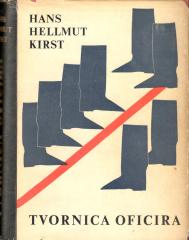
Tvornica oficira

Tvornica oficira

Hans Hellmut Kirst

The novel follows the investigation into the alleged suicide of cadet Walter Dornberger at a German military school during World War II and exposes the corruption, fear, and moral decline of the military system.

Naprijed, 1965.
Kroatisch. Latein Schrift. Fester Einband mit Schutzumschlag.
8,62
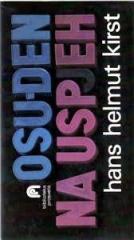
Osuđen na uspjeh

Osuđen na uspjeh

Hans Hellmut Kirst

U ovom delu se prvi put pojavljuje lik policijskog inspektora Kelera koji se neobičnim metodama bori protiv kriminala.

Prosveta, 1987.
Kroatisch. Latein Schrift. Taschenbuch.
4,98
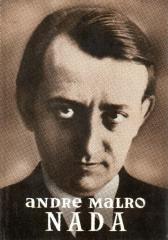
Nada

Nada

Andre Malraux

U romanu Nada iz 1937. godine Malraux opisuje iskustvo Španjolskog građanskog rata. S predgoovorom Petra Džadžića.

Nolit, 1957.
Serbisch. Latein Schrift. Taschenbuch mit Einband.
6,32
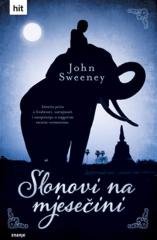
Slonovi na mjesečini

Slonovi na mjesečini

John Sweeney

Istinita priča o hrabrosti, ustrajnosti i suosjećanju u najgorim ratnim vremenima.

Znanje, 2018.
Kroatisch. Latein Schrift. Taschenbuch.
5,424,06 - 7,28
Mirni Amerikanac

Mirni Amerikanac

Graham Greene

„Tihi Amerikanac“ (1955) smešten je u Vijetnam pedesetih godina 20. veka, tokom francuske kolonijalne borbe protiv pobunjenika. Kroz atmosferu Sajgona, Grin stvara napetu priču o ljubavi i političkim intrigama, sa snažnom kritikom Vijetnamskog rata i šire

Bratstvo-Jedinstvo, 1968.
Serbisch. Latein Schrift. Taschenbuch.
4,26
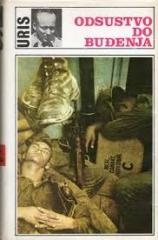
Odsustvo do buđenja

Odsustvo do buđenja

Leon Uris

„Odsustvo do buđenja“ (1953) je debitantski roman Leona Urisa zasnovan na njegovom iskustvu u Drugom svetskom ratu kao pripadnika 6. marinskog puka.

Otokar Keršovani, 1970.
Kroatisch. Latein Schrift. Fester Einband mit Schutzumschlag.
8,24