August Šenoa
August Šenoa (November 14, 1838 – December 13, 1881) was one of the most important Croatian writers of the 19th century and the founder of modern Croatian literature. He was born in Zagreb, educated in Prague, and after returning to his homeland he worked as a journalist, editor, and city notary. His work had a great influence on the cultural life of Croatia at that time.
Šenoa is best known for his historical novels that combine romantic, realistic, and national elements, such as Zlatarevo zlato (1871), Čuvaj se senjske ruke (Beware of the Hands of Senj), Seljačka buna (Peasant Revolt), and Diogenes. In these works, he successfully reconstructed Croatian history and at the same time promoted patriotism, moral values, and social responsibility.
He also wrote short stories, poems, criticism, and feuilletons, and edited the magazine Vijenac, through which he shaped literary and cultural trends. His linguistic contribution is particularly significant – he advocated for the standardization of the Croatian language and its enrichment with literary expression.
He died young, at the age of 43, after falling ill while helping those affected by the great Zagreb flood of 1880. His literary and cultural influence remains a lasting foundation of Croatian literature.
Titles in our offer
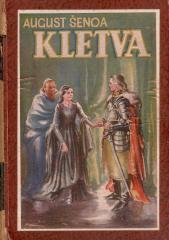
Kletva 2
Band 12 der Gesammelten Werke von August Šenoa ist die Fortsetzung des epischen historischen Romans, der im 14. Jahrhundert spielt. Die Konflikte zwischen Kaptol und Grič spitzen sich zu, und die Folgen des Bischofsfluchs bestimmen zunehmend das Schicksal
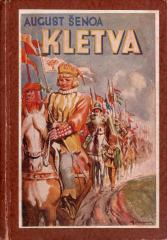
Kletva 3
Der Fluch 3 (Buch 13 der Gesammelten Werke) von August Šenoa ist die Fortsetzung des epischen historischen Romans über das 14. Jahrhundert, die Konflikte zwischen Kaptol und Grič, die Revolte des Adels gegen König Sigismund und das Schicksal der Figuren
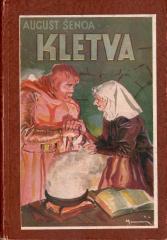
Kletva 4
„Der Fluch 4“ (Band 14 der Gesammelten Werke) bildet den Abschluss des epischen historischen Romans. Die Konflikte zwischen Kaptol und Grič, die Revolte des Adels gegen König Sigismund und die Folgen des Bischofsfluchs gipfeln in einem dramatischen Finale
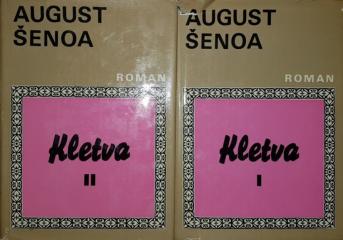
Kletva I-II
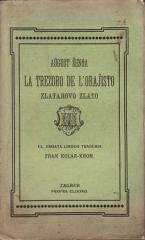
La trezoro de l'orajisto
Manja djela: Čudnovita dveh kaputov zmešarija Slavka / Glas od Gradne / Književno pismo / Kapetan Izailo / Mešterski list
Der zwölfte Band der Gesammelten Werke von August Šenoa – eine Sammlung kürzerer Prosa- und journalistischer Arbeiten: humorvolle Geschichten, Satiren, literarische Briefe und historische Skizzen aus der Feder des bedeutendsten kroatischen Schriftstellers
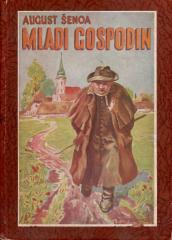
Mladi gospodin
August Šenoes „Junger Edelmann“, Band 4 der Gesammelten Werke, ist eine humorvolle Erzählung über die Erlebnisse des jungen Kaplans Janko Lugarić in den Pfarreien von Posavina. Eine beliebte, illustrierte Ausgabe mit Illustrationen von Andrija Maurović.
Mladi gospodin / Prosjak Luka
Mladi gospodin: August Šenoa opisuje kapelana Janka Lugarića, koji se pravim imenom zvao Janko Puškarić (1801-1874), a do smrti je bio kapelan u raznim župama u Hrvatskom Zagorju, Pokuplju i Turopolju.
Mladi gospodin, Prosjak Luka
Mladi gospodin: August Šenoa opisuje kapelana Janka Lugarića, koji se pravim imenom zvao Janko Puškarić (1801-1874), a do smrti je bio kapelan u raznim župama u Hrvatskom Zagorju, Pokuplju i Turopolju.
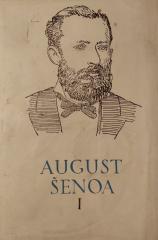
Pet stoljeća hrvatske književnosti #59: August Šenoa I
Sveska broj 1 iz ciklusa "Pet stoljeća hrvatske književnosti" posvećena Augustu Šenoi, jednom od najznačajnijih hrvatskih pisaca 19. vijeka.