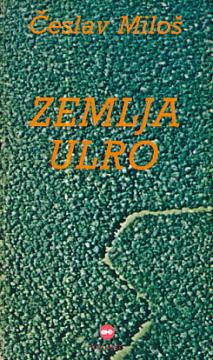
Zemlja Ulro

Zemlja Ulro

Czesław Miłosz
Original title
Ziemia Ulro
Translation
Petar Vujičić
Editor
Milomir Glišić
Dimensions
18 x 11 cm
Pages
320
Publisher
Dečje novine, Gornji Milanovac, 1982.
 
Distribution: 5,000 copies
 
Latin alphabet. Paperback.
Language: Serbian.

One copy is available

Condition:Used, very good condition
Damages or inconvenience notice:
  • Library stamp
  • Traces of patina
  • Slight damage to the cover
 

Are you interested in another book? You can search the offer using our search engine or browse books by category.

You may also be interested in these titles

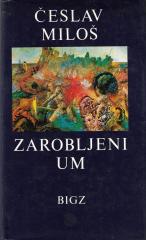
Zarobljeni um

Zarobljeni um

Czesław Miłosz

The Captive Mind is a book published in France in 1953 by Czesław Miłosz, shortly after he was granted political asylum in Paris due to his conflict with the communist authorities in Poland, which was then under the control of the USSR.

BIGZ, 1987.
Serbian. Latin alphabet. Hardcover with dust jacket.
11.489.18
Snoviđenja nad zalivom San Francisko

Snoviđenja nad zalivom San Francisko

Czesław Miłosz
Dečje novine, 1982.
Serbian. Latin alphabet. Paperback.
4.36
Kad žena zri

Kad žena zri

Honore de Balzac
Svjetlost, 1970.
Croatian. Latin alphabet. Hardcover.
4.99 - 5.00
Pustolovine Toma Sawyera

Pustolovine Toma Sawyera

Mark Twain

The Adventures of Tom Sawyer is the first truly realistic children's novel, not only in American but also in world children's literature. Twain's most famous work and a favorite children's book in which the writer described his boyhood experiences.

Nakladni zavod Hrvatske, 1947.
Croatian. Latin alphabet. Hardcover.
16.32
Usta puna zemlje

Usta puna zemlje

Branimir Šćepanović

The novel "Usta puna zemlje" (1970), the masterpiece of the Serbian writer Branimir Šćepanović, is a psychologically in-depth explorer of the limits of the human soul, solitude and existential freedom, reminiscent of Kafka and Camus.

BIGZ, 1987.
Serbian. Latin alphabet. Paperback.
3.98
Zagrepčanka

Zagrepčanka

Branislav Glumac

Branislav Glumac published a novel without periods or commas in 1974, as the relentless stream of thought of a young rebel. Published in socialist Yugoslavia, the work caused a scandal with its openness and became a classic about generational rebellion.

IROS, 1986.
Croatian. Latin alphabet. Hardcover.
8.24