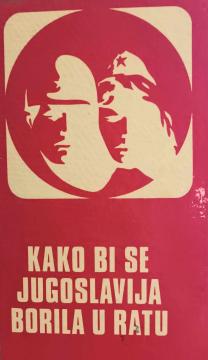
Kako bi se Jugoslavija borila u ratu

Kako bi se Jugoslavija borila u ratu

Luka Despenjić

How Yugoslavia would fight in the war, brings an interesting insight into the military strategies and tactics of that time.

If you are interested in learning more about how military strategists and soldiers prepared for potential conflicts, this book may provide some interesting insight.

Editor
Mensur Seferović
Graphics design
Aleksandar Švedić
Dimensions
20.5 x 12.5 cm
Pages
189
Publisher
Narodna armija, Beograd, 1973.
 
Distribution: 10,000 copies
 
Latin alphabet. Hardcover.
Language: Croatian.

One copy is available

Condition:Used, excellent condition
Damages or inconvenience notice:
  • Library stamp
Discounted price: 8.365.85
30% discount is valid until 8/7/26 11:59 pm
 

Are you interested in another book? You can search the offer using our search engine or browse books by category.

You may also be interested in these titles

Omladinski pokret Jugoslavije

Omladinski pokret Jugoslavije

The book has a scientific-documentary character and is often used as a source in the study of political history and social movements in the former Yugoslavia.

Mladost, 1969.
Serbian. Latin alphabet. Hardcover with dust jacket.
9.987.49
Društvo i politika

Društvo i politika

Mihailo V. Popović

The book represents a fundamental sociological and political science work that deals with the relationship between social structures and political systems, with special emphasis on Marxist theory, self-management, and the socialist society of the former

Rad, 1984.
Serbian. Latin alphabet. Paperback.
4.98
U Titovim pandžama (Svjedočanstva)

U Titovim pandžama (Svjedočanstva)

Vladislav Musa

The content of the book is real and experienced in the enslaved homeland, in the dictatorship and Tito's prisons.

Vlastita naklada, 1973.
Croatian. Latin alphabet. Paperback.
27.36
Kroz tajni arhiv Udbe

Kroz tajni arhiv Udbe

Nikola Milovanović

The author of this book describes the fate of the main enemies of the Yugoslav communists in the last stage of the war, as well as their attempts to prevent the consolidation of communist power in Yugoslavia in the first post-war years.

Sloboda, 1986.
Croatian. Latin alphabet. Hardcover with dust jacket.
The book consists of two volumes
15.26
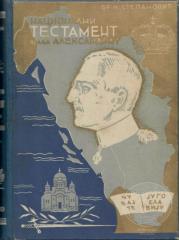
Nacionalni testament kralja Aleksandra I

Nacionalni testament kralja Aleksandra I

Branislav M. Stepanović

The author presents the political and ideological legacy of King Aleksandar I Karađorđević the Unifier. The book, published immediately after the king's death, is an attempt to preserve and transmit his political ideals to future generations.

Jugoslovenska biblioteka "Bratstvo", 1936.
Serbian. Cyrillic alphabet. Hardcover.
28.36
Sudbonosni podvig Jugoslavije: Podsjećanje na historijsko NE staljinizmu, događaj koji je opredijelio budućnost Jugoslavije

Sudbonosni podvig Jugoslavije: Podsjećanje na historijsko NE staljinizmu, događaj koji je opredijelio budućnost Jugoslavije

Raif Dizdarević

The book by Raif Dizdarević, one of the last living actors of Yugoslav diplomacy, presents his reconstruction of the most fateful moment of post-war Yugoslavia – the split with Stalin and the Informburo in 1948–1953.

Udruženje za modernu historiju (UMHIS), 2018.
Croatian. Latin alphabet. Paperback.
23.58