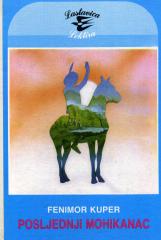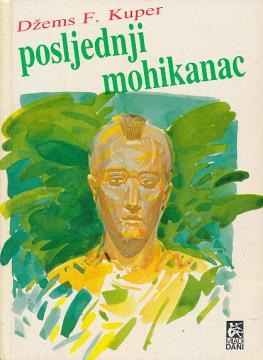
Posljednji Mohikanac

Posljednji Mohikanac

James Fenimore Cooper

The novel takes place in the middle of the 18th century during the Anglo-French war and is partly based on true events.

He is a white hunter, with the Indian name Oko Sokolovo, a mediator between two hostile and mutually incomprehensible worlds, but also a witness to the tragedy of the Indians and the disappearing civilization.

Translation
Obren Vukomanović
Editor
Ljiljana Cikota
Graphics design
Milivoje Unković
Dimensions
19.5 x 14.5 cm
Pages
207
Publisher
Svjetlost, Sarajevo, 1988.
 
Latin alphabet. Hardcover.
Language: Croatian.
ISBN
8-60-101193-4

One copy is available

Condition:Used, excellent condition
Damages or inconvenience notice:
  • Signature of previous owner
  • Traces of patina
 

Are you interested in another book? You can search the offer using our search engine or browse books by category.

You may also be interested in these titles

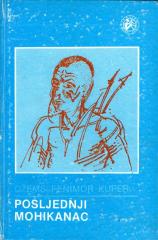
Posljednji Mohikanac

Posljednji Mohikanac

James Fenimore Cooper

During the French and Indian War of 1757, Hawkeye and the Mohicans Uncas and Chingachgook follow two sisters through the wilderness. The struggle for survival, love, and the last of the Mohicans in the conflict between civilization and nature.

Jutarnji list, 2004.
Croatian. Latin alphabet. Paperback.
3.76 - 4.62
Posljednji Mohikanac

Posljednji Mohikanac

James Fenimore Cooper
Veselin Masleša, 1990.
Croatian. Latin alphabet. Hardcover.
6.42
Posljednji Mohikanac

Posljednji Mohikanac

James Fenimore Cooper
Svjetlost, 1980.
Croatian. Latin alphabet. Paperback.
4.66
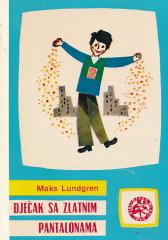
Dječak sa zlatnim pantalonama

Dječak sa zlatnim pantalonama

Max Lundgren

The novel emphasizes how even good can have bad consequences when taken out of proportion, and that responsibility, morality, and honesty are more important than wealth itself.

Svjetlost, 1976.
Croatian. Latin alphabet. Hardcover.
2.64
Delije na Bihaću

Delije na Bihaću

Branko Ćopić

Delije na Bihać is a humorous story by Branko Ćopić in which the author describes the adventures and misadventures of young village men – "delija" – who go to Bihać, then a larger and more important urban center.

Svjetlost, 1976.
Croatian. Latin alphabet. Hardcover.
2.74
Bosonogo djetinjstvo

Bosonogo djetinjstvo

Branko Ćopić

The work brings together a gallery of colorful characters – family members, village neighbors, teachers, friends – who shape Ćopić's childish view of the world.

Svjetlost, 1976.
Croatian. Latin alphabet. Hardcover.
3.48