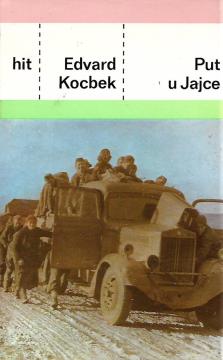
Put u Jajce

Put u Jajce

Edvard Kocbek

In Put u Jajce, Edvard Kocbek provides personal and political testimony about key moments in Yugoslav history. The book is based on Kocbek's memories from the Second World War, especially the trip to Jajce in 1943.

The second session of AVNOJ was held in Jajce in 1943, an event that determined the future of Yugoslavia. Through a reflective and lyrical style, the author shows the tension of the times, political dilemmas and his own internal struggle as a Catholic intellectual in the partisan movement. Kocbek not only documents historical facts, but also deeply questions ideologies, morals and the destiny of the individual in the vortex of great changes. The book is a powerful testimony of the conflict between ideals and reality, pointing to the complexity of history and human decisions.

Original title
Slovensko poslanstvo: Dnevnik s poti v Jajce 1943
Translation
Ivan Brajdić
Editor
Zlatko Crnković
Illustrations
Božidar Jakac
Graphics design
Alfred Pal
Dimensions
19.5 x 12 cm
Pages
260
Publisher
Znanje, Zagreb, 1978.
 
Latin alphabet. Hardcover with dust jacket.
Language: Croatian.

One copy is available

Condition:Used, excellent condition
 

Are you interested in another book? You can search the offer using our search engine or browse books by category.

You may also be interested in these titles

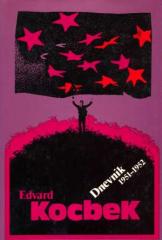
Dnevnik 1951-1952.

Dnevnik 1951-1952.

Edvard Kocbek
Globus, 1987.
Croatian. Latin alphabet. Hardcover with dust jacket.
4.50
Programi i manifesti u hrvatskoj književnosti

Programi i manifesti u hrvatskoj književnosti

Miroslav Šicel

The collection "Programs and Manifestos in Croatian Literature", edited by Miroslav Šicel and published by Liber in 1972, represents a key collection of texts that shaped the direction of Croatian literature through various historical phases.

Liber, 1972.
Croatian. Latin alphabet. Paperback with dust jacket.
6.24
Modra bilježnica

Modra bilježnica

Emanuil Kazakevič

The novel depicts the last days of Vladimir Ilyich Lenin on the eve of the October Revolution. Through his thoughts and actions, it depicts the struggle for social change.

Naprijed, 1967.
Croatian. Latin alphabet. Hardcover with dust jacket.
3.99 - 7.32
Žena bližnjega tvoga

Žena bližnjega tvoga

Gay Talese

Talese's greatest success was achieved precisely with the book Žena bliznega tvoga (1980), which reads like a novel about sexual liberation in America, from experimental "love communes" under the auspices of religious sects, to the spectacular success of

Znanje, 1984.
Croatian. Latin alphabet. Hardcover with dust jacket.
The book consists of two volumes
7.32 - 7.34
Kaiserove kulije: roman njemačke ratne mornarice

Kaiserove kulije: roman njemačke ratne mornarice

Theodor Plievier

The Kaiser's Coolies (1930) is an anti-militarist novel by Theodor Plievier. Based on his own experience, it depicts the brutal life of ordinary sailors in the German navy during World War I and the sailors' mutiny of 1917.

Naklada Binoza, 1934.
Croatian. Latin alphabet. Hardcover with dust jacket.
5.263.68
Kako stoje stvari: Predavanje održano u Domu JNA u Zagrebu 17. 12. 1952.

Kako stoje stvari: Predavanje održano u Domu JNA u Zagrebu 17. 12. 1952.

Miroslav Krleža

In his lecture How Things Are (1952), Krleža discusses the political and cultural situation of post-war Yugoslavia, emphasizing the need for critical thought, cultural renewal, and resistance to dogmatism.

Zora, 1953.
Croatian. Latin alphabet. Paperback.
12.48