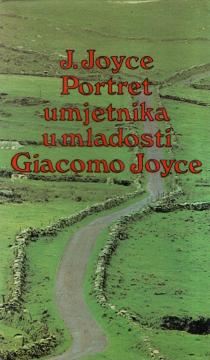
Portret umjetnika u mladosti / Giacomo Joyce

Portret umjetnika u mladosti / Giacomo Joyce

James Joyce

A Portrait of the Artist as a Young Man (1916) follows the upbringing of Stephen Dedalus, Joyce's alter ego, from childhood to youth in Ireland. Giacomo Joyce (1914) is a short, poetic prose piece in which Joyce records his obsessive feelings for a young

  • Portrait of an Artist in His Youth: The novel explores his spiritual, intellectual, and artistic development through five chapters, using a stream of consciousness approach. Stephen, sensitive and introspective, struggles with his Catholic upbringing, Irish nationalism, and family expectations. In his childhood, he experiences religious guilt, while in adolescence he discovers sexuality and intellectual curiosity. At university, he develops an aesthetic theory, rejecting religion and social norms. Ultimately, Stephen decides to leave Ireland, devoting himself to art in exile, seeking freedom of expression. The novel is a bildungsroman that depicts the conflict between the individual and society, with an emphasis on the artist's search for identity.

  • Giacomo Joyce: Written in fragments, the text reveals the inner monologue of the narrator, "Giacomo", who is in love with his student. His passion is mixed with feelings of guilt and restlessness as he contemplates her beauty and unattainability. Published posthumously, the work is lyrical and introspective in style, exploring themes of desire, forbidden love, and artistic inspiration, as well as powerlessness in the face of social boundaries.

Both works reflect Joyce's virtuosity in language and deep analysis of the human psyche, with an emphasis on art and internal conflicts.

Original title
A Portrait of the Artist as a Young Man
Translation
Leo Držić, Antun Šoljan
Editor
Vera Čičin-Šain
Graphics design
Alfred Pal
Dimensions
21 x 12.5 cm
Pages
308
Publisher
Sveučilišna naklada Liber (SNL), Zagreb, 1981.
 
Latin alphabet. Hardcover with dust jacket.
Language: Croatian.

One copy is available

Condition:Used, very good condition
Damages or inconvenience notice:
  • Slight damage to the cover
Discounted price: 6.385.10
20% discount is valid until 3/24/26 11:59 pm
 

Are you interested in another book? You can search the offer using our search engine or browse books by category.

You may also be interested in these titles

Prvo šišanje

Prvo šišanje

Bohumil Hrabal

The First Haircut, a short story written in 1970 and published in 1976, is the first in a series of prose pieces by Bohumil Hrabal describing Nymburk, the town where he spent his childhood. In 1981, The First Haircut was adapted for the screen by Jiry Men

24 sata, 2007.
Croatian. Latin alphabet. Paperback.
7.24
Na posljednjim tračnicama

Na posljednjim tračnicama

August Cesarec

An autobiographical novella in which Cesarec describes his experience in prison, emphasizing the psychological and social aspects of being in prison. The novella emphasizes the strength of the spirit in the fight against injustice and loyalty to one's ide

Mladost, 1963.
Croatian. Latin alphabet. Paperback with dust jacket.
3.76
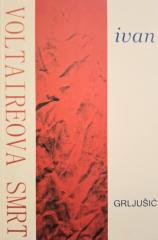
Voltaireova smrt

Voltaireova smrt

Ivan Grljušić

The book is not a novel, but a collection that mixes short stories, drama, and essay fragments, with a focus on death, power, and existential dilemmas.

Vlastita naklada, 2006.
Croatian. Latin alphabet. Paperback.
4.98
Inšallah Madona, inšallah

Inšallah Madona, inšallah

Miljenko Jergović

Inšalh, Madonna, Inšalah by Miljenko Jergović is a collection of stories whose richness of motifs and emotions branches out like carved ivory – in each story a story, in each destiny an entire world.

Durieux, 2004.
Croatian. Latin alphabet. Paperback.
16.32
Devojka i golubovi

Devojka i golubovi

Jaroslaw Iwaszkiewicz

Young Edek lives with his elderly father who tries to keep his son by his side. The boy's longing for freedom and a girl clashes with his father's possessiveness. The pigeons symbolize unattainable freedom. The conflict leads to a tragic ending.

Svjetlost, 1965.
Serbian. Latin alphabet. Paperback.
2.14
Legenda o lijepom Pécopinu i lijepoj Bauldouri

Legenda o lijepom Pécopinu i lijepoj Bauldouri

Victor Hugo

A romantic story by Victor Hugo, the 21st letter from his travelogue "Le Rhin" ("The Rhine", 1842). A romantic classic, similar to the fairy tales of the Brothers Grimm or Andersen, but with Hugo's deep emotionality and philosophy of eternal love.

Zora, 1951.
Croatian. Latin alphabet. Paperback.
3.34