Arktička pradomovina Veda
Rare book

Arktička pradomovina Veda

Bal Gandahar Tilak

The book The Arctic Homeland of the Vedas (1903) by the Indian scholar Tilak proposed the hypothesis that the ancient Aryans, the authors of the Rigveda, originated in the Arctic region. Although controversial, the book remains important in the study of V

Tilak bases his thesis on Vedic texts, astronomical references, and mythological descriptions to support the idea that the original homeland of the Aryans was in the far north, near the North Pole, before they migrated to the Indian subcontinent.

Tilak analyzes Vedic accounts of long polar days and nights, which point to a region where the sun does not set for six months, characteristic of the Arctic. He describes Vedic mythology, such as the stories of Indra and Vritra, as allegories of natural phenomena such as the polar dawn and darkness. He also uses astronomical data from the Rigveda, such as the positions of the stars, to date the texts and connect them to the period around 4500–2500 BC, placing them in the context of climate change after the Ice Age.

The book also examines linguistic and cultural links between Indo-European peoples, suggesting that the Aryans brought their traditions from the Arctic to India. Tilak's hypothesis has caused controversy, but is significant for its interdisciplinary analysis and contribution to debates about the origins of Indo-European peoples.

Original title
The Arctic Home in the Vedas
Translation
Milan Mladenović
Editor
Dragoš Kalajić
Dimensions
21 x 11.5 cm
Pages
403
Publisher
NIRO Književne novine, Beograd, 1987.
 
Latin alphabet. Paperback.
Language: Serbian.

One copy is available

Condition:Unused
 

Are you interested in another book? You can search the offer using our search engine or browse books by category.

You may also be interested in these titles

Drevni tragovi: Tajne drevne povijesti i pretpovijesti

Drevni tragovi: Tajne drevne povijesti i pretpovijesti

Michael Baigent

In seinem Buch Ancient Traces präsentiert der neuseeländische Autor Michael Baigent (Mitautor des Bestsellers Holy Blood, Holy Grail) die provokante These, dass die offizielle Geschichte der Menschheit unvollständig sei und dass es eine verborgene, viel ä

Stari grad, 2005.
Croatian. Latin alphabet. Hardcover.
15.22 - 15.44
Osvit tehnologije

Osvit tehnologije

Ivor Karavanić, Jacqueline Balen

Katalog ‘Osvit tehnologije’ prati istoimenu izložbu Jacqueline Balen i Ivora Karavanića, koja je u Arheološkom muzeju u Zagrebu bila postavljena u razdoblju od 30. 1. do 31. 3. 2003. godine.

Arheološki muzej, 2003.
Croatian. Latin alphabet. Paperback.
5.82
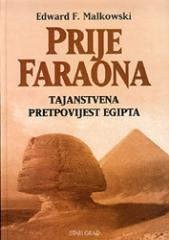
Prije faraona: Tajanstvena pretpovijest Egipta

Prije faraona: Tajanstvena pretpovijest Egipta

Edward F. Malkowski

Američki istraživač Edward Malkowski u knjizi Prije faraona tvrdi da je egipatska civilizacija nasljednica daleko starije, tehnološki naprednije kulture koja je postojala najmanje 10–12 tisuća godina prije dinastičkog razdoblja.

Stari grad, 2006.
Croatian. Latin alphabet. Hardcover.
16.22 - 16.32
Uništenje Atlantide: Uvjerljiv dokaz o iznenadnoj propasti legendarne civilizacije

Uništenje Atlantide: Uvjerljiv dokaz o iznenadnoj propasti legendarne civilizacije

Frank Joseph

Frank Joseph (pravim imenom Francis Joseph Collin) u ovoj knjizi predstavlja najsveobuhvatniju modernu obranu Platonove Atlantide kao stvarne povijesne civilizacije koja je nestala u katastrofi oko 1628.–1600. pr. Kr.

Stari grad, 2004.
Croatian. Latin alphabet. Hardcover.
15.22 - 15.32
Ciklus svemirskih katastrofa: Potopi, požari i skapavanja u povijesti civilizacije

Ciklus svemirskih katastrofa: Potopi, požari i skapavanja u povijesti civilizacije

Richard Firestone, Allen West, Simon Warwick-Smith

The book is the most readable and complete overview of the evidence that human civilization has already been nearly wiped out of the universe once – and that such cycles may repeat themselves every few tens of thousands of years.

Stari grad, 2007.
Croatian. Latin alphabet. Hardcover.
21.22 - 21.34