Bolest

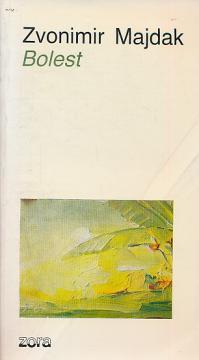
Bolest

Zvonimir Majdak

The novel belongs to Majdak's cycle of existentialist prose, which allegorically addresses the problems of life in an urban environment.

The novel explores themes of alienation, existential crisis, and inner emptiness. The main character faces a profound sense of meaninglessness in everyday life, resulting in anxiety, psychological burden, and a condition symbolized by "illness" – a metaphor for identity crisis and spiritual emptiness. Through an introspective and allegorical approach, Majdak depicts the struggle of an individual with inner turmoil and the social pressures of an urban environment. The novel is notable for its style and thematic depth, initiating Majdak's series of existentialist works, and is considered one of the key works of Croatian literature of that period.

Editor
Nenad Popović
Graphics design
Sanja Iveković
Dimensions
19 x 11 cm
Pages
333
Publisher
Zora, Zagreb, 1988.
 
Distribution: 2,000 copies
 
Latin alphabet. Paperback.
Language: Croatian.

One copy is available

Condition:Used, excellent condition
 

Are you interested in another book? You can search the offer using our search engine or browse books by category.

You may also be interested in these titles

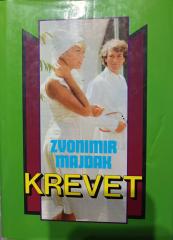
Krevet

Krevet

Zvonimir Majdak
Mladinska knjiga, 1990.
Croatian. Latin alphabet. Hardcover with dust jacket.
2.99
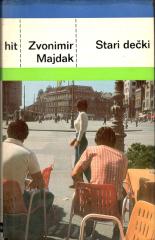
Stari dečki

Stari dečki

Zvonimir Majdak

The novel Stari dečki by Zvonimir Majdak, published in 1975, is a sequel to the cult novel Kužiš, stari moj and is part of his "prose in jeans", which is characterized by relaxed, Zagreb jargon mixed with a semi-Kajkavian style.

Znanje, 1975.
Croatian. Latin alphabet. Hardcover with dust jacket.
5.42
Pazi, tako da ostanem nevina

Pazi, tako da ostanem nevina

Zvonimir Majdak
Naprijed, 1986.
Croatian. Latin alphabet. Hardcover with dust jacket.
9.99
Usta puna zemlje

Usta puna zemlje

Branimir Šćepanović

The novel "Usta puna zemlje" (1970), the masterpiece of the Serbian writer Branimir Šćepanović, is a psychologically in-depth explorer of the limits of the human soul, solitude and existential freedom, reminiscent of Kafka and Camus.

BIGZ, 1987.
Serbian. Latin alphabet. Paperback.
3.98
Deobe

Deobe

Dobrica Ćosić

Deobe is a novel about the tragic division of Serbs into Chetniks and Partisans during World War II. Winner of the NIN Award, it is part of a wider epic trilogy, inspired by Ćosić's experiences and historical documents.

Prosveta, 1963.
Croatian. Latin alphabet. Hardcover with dust jacket.
13.74
Deobe 1-3

Deobe 1-3

Dobrica Ćosić

This work, awarded the NIN Prize for that year, is considered one of the most significant in Serbian literature after World War II.

Prosveta, 1961.
Serbian. Cyrillic alphabet. Hardcover with dust jacket.
The book consists of 3 volumes
11.42