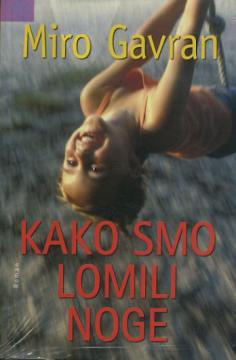
Kako smo lomili noge

Kako smo lomili noge

Miro Gavran

The novel How We Broke Our Legs (1997), a humorous and tender chronicle of family life through four decades of Croatian history, follows the fate of three generations of a Slavonian family from 1951 to 1992.

The main narrator, a young man from the family, grows up in a small Slavonian town, where his grandfather and father are bound by tradition and hard work in the fields, and his mother brings warmth and wisdom. The family moves to Zagreb in search of a better life, but a curse follows: broken legs become a metaphor for fateful blows – from socialist reforms, through student uprisings in 1968, to the collapse of Yugoslavia and the Homeland War. One of the first Croatian novels to address war, Gavran weaves it subtly, through personal stories of loss and resistance.

Through humor and irony, the author mocks everyday absurdities: boys in love who break bones for girls, family quarrels and dreams of freedom. Generational differences – from the war traumas of a grandfather to the young dreams of a grandson – celebrate solidarity and healing. Slavonia and Zagreb become the stage for a travelogue through love, loss and hope, reminding us that life, like a broken leg, heals with time and laughter.

Editor
Zoran Maljković
Graphics design
Fadil Vejzović
Dimensions
20 x 14 cm
Pages
184
Publisher
Mozaik knjiga, Zagreb, 2007.
 
Latin alphabet. Paperback.
Language: Croatian.

One copy is available

Condition:Used, excellent condition
Specificity of this instance:
Author signature
Dedication
Discounted price: 9.367.02
25% discount is valid until 5/6/26 11:59 pm
 

Are you interested in another book? You can search the offer using our search engine or browse books by category.

You may also be interested in these titles

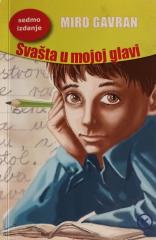
Svašta u mojoj glavi

Svašta u mojoj glavi

Miro Gavran
Mozaik knjiga, 2008.
Croatian. Latin alphabet. Paperback.
4.99
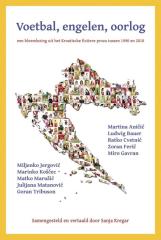
Voetbal, engelen, oorlog

Voetbal, engelen, oorlog

Miljenko Jergović, Julijana Matanović, Goran Tribuson, Ludwig Bauer, Ratko Cvetnić, Zoran Ferić, ...
KLIN, 2013.
German. Latin alphabet. Paperback.
7.506.00
V.

V.

Thomas Pynchon

The novel represents a journey into an alternative world – a world that we all belong to from time to time, but of which we would not want to be a part, a world of paranoia and alienation that we are not entirely sure is just an alternative or the bare tr

Čarobna knjiga, 2010.
Serbian. Latin alphabet. Paperback.
21.98
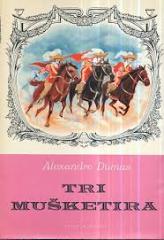
Tri mušketira 1-2

Tri mušketira 1-2

Alexandre Dumas

Dumas' version of the story depicts the adventures of d'Artagnan and his friends from 1625 to 1628.

Epoha, 1966.
Croatian. Latin alphabet. Hardcover with dust jacket.
The book consists of two volumes
9.48
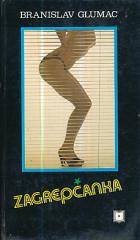
Zagrepčanka

Zagrepčanka

Branislav Glumac

Branislav Glumac published a novel without periods or commas in 1974, as the relentless stream of thought of a young rebel. Published in socialist Yugoslavia, the work caused a scandal with its openness and became a classic about generational rebellion.

IROS, 1986.
Croatian. Latin alphabet. Hardcover.
8.24
Dok ležah na samrti

Dok ležah na samrti

William Faulkner

Faulkner's 1930 novel, a classic example of modernist literature. It is often compared to Joyce's "Ulysses" for its innovative structure, but is more accessible due to its focus on family.

Rad, 1985.
Croatian. Latin alphabet. Paperback.
3.26