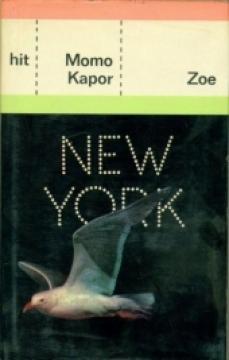
Zoe

Zoe

Momo Kapor

The novel "Zoe" (1978), one of Momo Kapor's most popular works, follows Arsen Lero, a 39-year-old art historian from the fictional Republic of Kosiliya – a small island under an authoritarian regime.

Ler, a married father of a young daughter, Maja, and curator of a gallery in the city of Mimosa, receives an assignment from the Minister of Culture to purchase the portrait "Girl with a Doll" by the painter Valdemar Udini, a key piece of national heritage, at an auction in New York. He travels by plane via Athens to Megapolis, experiencing the shock of the contrast between provincial life and the chaotic city.

At the auction, with the help of the consulate, he buys the painting for $1,200, but is confronted by Princess Zoe Kudelin, an exiled member of a deposed royal dynasty, born in 1938 - the same day as Ler. Zoe, a cosmopolitan woman in exile, lives in Greenwich Village, dealing in promotions and fashion to survive. She claims that the portrait is her boyish self, painted by Udini. The two begin a passionate romance: walks in Central Park, dinners at the "Russian Tea Room", visits to museums such as the Guggenheim, and exploring the Kosilian community in the Bronx, at the "Mimosa" tavern. Ler moves in with her, changing his habits, while facing offers from rich collectors and traces of the past.

Zoe bears the burden of exile: the death of her father, King Nicholas IV, at the Savoy Hotel, and only has a button from his shirt as an inheritance. The novel explores the themes of totalitarian repression (censorship, paranoia, prohibition of escape), exile and nostalgia for a lost home, the identity of a small nation in world chaos (Kozilia as a "non-existent" island), art as resistance and a bridge to the roots, and love between the past and the present - a modern fairy tale about a shepherd and a princess. Through satirical descriptions, introspective monologues and vivid urban scenes, Kapor shows the contrast of tradition and modernity, the poverty of emigrants and false splendor, eroticism and loneliness, reminding us that exile is not only a geographical, but also a mental phenomenon.

Urednik
Zlatko Crnković
Naslovnica
Alfred Pal
Dimenzije
20 x 12 cm
Broj strana
167
Izdavač
Znanje, Zagreb, 1978.
 
Latinica. Tvrde korice s omotom.
Jezik: Hrvatski.

Jedan primerak je u ponudi

Stanje:Korišćeno, u odličnom stanju
Dodato u korpu!
 

Zanima Vas i neka druga knjiga? Možete pretražiti našu ponudu pomoću pretrage ili prelistati knjige po kategorijama.

Možda će Vas zanimati i ovi naslovi

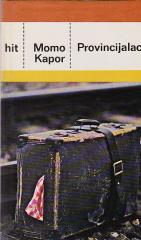
Provincijalac

Provincijalac

Momo Kapor

Koliko su Foliranti priča o Kaporovim studentskim danima u Beogradu kasnih pedesetih, Provincijalac je knjiga koja budi uspomene na njegovo djetinjstvo u Sarajevu, gdje je autor proveo prve godine svog života.

Znanje, 1978.
Srpski. Latinica. Tvrde korice s omotom.
6,42
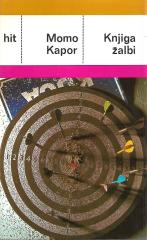
Knjiga žalbi

Knjiga žalbi

Momo Kapor

Das Beschwerdebuch erschien erstmals 1984 und erregte sofort große Aufmerksamkeit beim Literaturpublikum und bei der Kritik.

Znanje, 1984.
Hrvatski. Latinica. Tvrde korice s omotom.
9,54 - 9,56
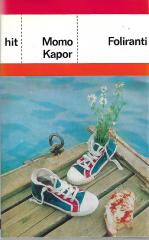
Foliranti

Foliranti

Momo Kapor

Der 37-jährige Kapor erinnert sich an sich selbst im Alter von neunzehn Jahren, an das damalige Belgrad und an all die Menschen, die ihm damals wichtig waren. Dieses Buch ist ein an sie gerichteter Brief, gleichzeitig aber auch ein eindrucksvolles Tagebuc

Znanje, 1985.
Srpski. Latinica. Broširano.
4,68
Tajna Edvina Druda

Tajna Edvina Druda

Charles Dickens

„Das Geheimnis des Edwin Drood“ ist der letzte Roman des berühmten englischen Schriftstellers Charles Dickens. Dieser Roman blieb jedoch unvollendet, da Dickens starb, bevor er die Geschichte fertigstellen konnte.

Džepna knjiga, 1956.
Hrvatski. Latinica. Broširano.
4,98
Gordana VI: Veliki sud

Gordana VI: Veliki sud

Marija Jurić Zagorka
Stvarnost, 1966.
Hrvatski. Latinica. Tvrde korice.
8,34 - 10,32
Raskrižje

Raskrižje

Fate Velaj
Alfa, 2018.
Hrvatski. Latinica. Broširano.
14,88