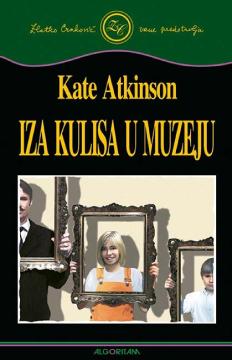
Iza kulisa u muzeju

Iza kulisa u muzeju

Kate Atkinson

Kate Atkinson's debut novel, told through the eyes of the youngest daughter in a dysfunctional Yorkshire family. Like museum exhibits, the characters are vivid, imperfect, a reminder that life behind the scenes is full of unexpected twists and turns.

Ruby begins her story from the moment of her conception in 1951 – an accidental one, in a hotel room during her sister Patricia’s wedding – where, as a fetus, she hears the inner monologues of her mother Bunty, a chronically unhappy woman trapped in a marriage with the gentle but indecisive George. Marked by postpartum depression after the births of Patricia and Deborah, Bunty sees life as an endless litany of disappointments: “Why does it always happen to me?”

The story expands into a multigenerational saga of “The Family,” beginning in the late 19th century, when great-grandmother Alice, a fragile beauty, runs away with the French photographer Reginald, leaving behind scandals and secrets. Across the generations – mother Nell, grandmother Clarissa – world wars, the loss of children (the death of little brother Billy in a fire), betrayals and obsessions with the past pass. Ruby, obsessed with museum objects that tell stories (like a wedding ring or a photograph), reconstructs the family history through humorous but painful anecdotes: Bunty's love affair with a fishmonger, Patricia's pregnancy, Deborah's rebellion.

Atkinson mixes humor, irony, and sad introspection, exploring themes of inheritance, loss, the impact of war on women, and identity in the chaos of family. Ruby's voice—smart, sarcastic, compassionate—makes the novel a timeless portrait of the English countryside, where every object holds a secret and every story heals wounds.

Original title
Behind the Scenes at the Museum
Translation
Anka Katušić Balen
Editor
Zlatko Crnković
Graphics design
Nenad Martić
Dimensions
24 x 15 cm
Pages
345
Publisher
Algoritam, Zagreb, 2000.
 
Latin alphabet. Hardcover.
Language: Croatian.

One copy is available

Condition:Unused
 

Are you interested in another book? You can search the offer using our search engine or browse books by category.

You may also be interested in these titles

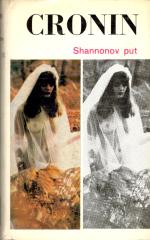
Shannonov put

Shannonov put

Archibald Joseph Cronin

Cronin's moving story of redemption. Robert Shannon, a fanatical doctor-researcher, sacrifices love and life for science, but in the end loses everything – his girlfriend, recognition, health – only to realize through suffering: medicine without humanity

Otokar Keršovani, 1966.
Croatian. Latin alphabet. Hardcover with dust jacket.
6.24
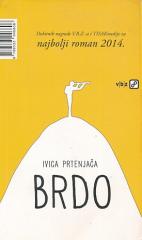
Brdo

Brdo

Ivica Prtenjača

It is a deeply disturbing text, full of emotions and traumatic experiences of a collapsed, imploded urban individual crying out for the meaning of life.

VBZ, 2014.
Croatian. Latin alphabet. Paperback.
7.826.26
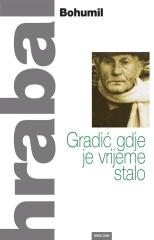
Gradić gdje je vrijeme stalo

Gradić gdje je vrijeme stalo

Bohumil Hrabal

Bohumil Hrabal, a Czech writer known for his lyrical grotesque and humor, in his novel The Town Where Time Stood Still evokes childhood in the small town of Libeň (part of Prague), where time seems to stand still in a magical but melancholic world.

Hena Com, 2006.
Croatian. Latin alphabet. Paperback.
7.62
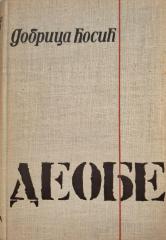
Deobe 1-3

Deobe 1-3

Dobrica Ćosić

This work, awarded the NIN Prize for that year, is considered one of the most significant in Serbian literature after World War II.

Prosveta, 1961.
Serbian. Cyrillic alphabet. Hardcover with dust jacket.
The book consists of 3 volumes
11.42
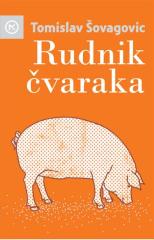
Rudnik čvaraka

Rudnik čvaraka

Tomislav Šovagović

The debut work of Croatian writer Tomislav Šovagović, awarded the Josip and Ivan Kozarac Award in 2012, is a dedication to Slavonia – the region of his childhood that the author, born in Dalmatia, observes with foreign but tender eyes.

Mozaik knjiga, 20112.
Croatian. Latin alphabet. Paperback.
11.569.25
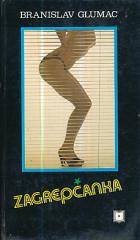
Zagrepčanka

Zagrepčanka

Branislav Glumac

Branislav Glumac published a novel without periods or commas in 1974, as the relentless stream of thought of a young rebel. Published in socialist Yugoslavia, the work caused a scandal with its openness and became a classic about generational rebellion.

IROS, 1986.
Croatian. Latin alphabet. Hardcover.
8.24