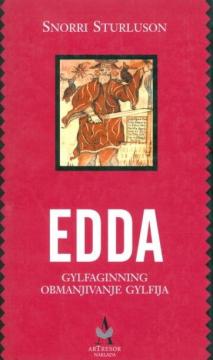
Edda Gylfaginning / Obmanjivanje Gylfija
Within medieval European literature, Snorra Edda occupies a particularly significant position, as it represents the only attempt at a systematic presentation of mythological tradition on our continent.
Apart from this North Germanic mythology, nothing similar exists in either the ancient or medieval literature of other European peoples. Snorri's Edda consists of a Prologue and three main parts: Gylfaginning (The Deception of Gylfi), Skáldskaparmál (The Word of Poetry), and Háttatal (The List of Verses). In the Prologue, Snorri presents his view of the mythological material he wishes to narrate, and the first part of the Edda (The Deception of Gylfi) is a concise account of North Germanic mythology, from the creation of the world, through stories from the lives of the gods, to their final doom, Ragnarök. The narrative framework in the part of the Edda entitled Gylfaginning (The Deception of Gylfi) is a sketch of the mythical Swedish king Gylfi, a representative of the ancient inhabitants of the European north, wise and versed in spells. Disguised and under the name of Gangleri ("he who walks"), Gylfi travels to Asgard ("the world of Asa") to meet the Aes and learn their wisdom and magic, and create a bond between them and his There, in the court, he meets the gods who answer his questions about the creation and destruction of the world, about the gods and their deeds, so they get rid of Gangleri, who unexpectedly finds himself in the field from which the courts and the gods have disappeared. But what Gangleri experienced and heard was still recounted in his country.
One copy is available