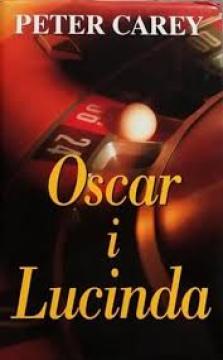
Oscar i Lucinda
The novel tells the unusual love story of an English priest and an Australian heiress in the 19th century. Bound by a passion for gambling and faith, they embark on a crazy bet together – transporting a glass church through the Australian outback.
Oscar and Lucinda (1988) is one of the most famous novels by Australian writer Peter Carey and winner of the Booker Prize in 1988 and the Miles Franklin Award in 1989. Set in the mid-19th century, the novel tells the story of Oscar Hopkins, a young Anglican priest from England who, in defiance of his strict father, renounces his Puritan faith and discovers a passion for gambling. On his way to Australia, he meets Lucinda Leplastrier, a free-spirited heiress of a glass factory, equally prone to risk and unsavory social compromises.
Their friendship develops into a collaboration and a bet: Lucinda challenges Oscar to carry a glass church through the wild Australian outback to the remote town of Bellingen. This adventure, at once grotesque and poetic, becomes a metaphor for human faith, the absurdity and the fragility of idealism. Carey uses the transparency of glass as a symbol of vulnerability – both of the individual and of civilization.
The novel combines historical realism with irony and fantastic elements, depicting colonial Australia as a place of contradictions: rich nature and harsh society, religious conflicts and the human passion for survival. Through the parallel fates of the two protagonists, Carey examines the limits of love, fanaticism and chance. Despite the humorous tone and satire, the novel's ending takes on tragic proportions, confirming Oscar and Lucinda as one of the key works of Australian literature — a story of faith, obsession and the unattainable search for meaning.
One copy is available