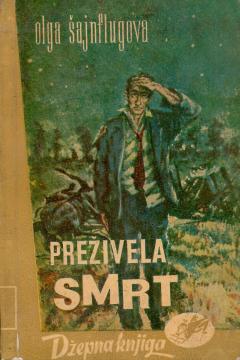
Preživela smrt
"Surviving Death" (1939) is a romantic-psychological novel by Czech writer, actress, and playwright Olga Scheinpflugová, completed shortly before the death of her husband, Karel Čapek, in 1938.
The main character – a young man without a name in some descriptions – has been deeply convinced (perhaps a prophecy, a medical diagnosis or an inner fear) since his early youth that he will die young. He therefore lives intensely, almost desperately: he travels, experiences adventures, falls in love, goes through dangers, war horrors and personal crises. Every time he thinks the end is near – illness, accident, war front – death bypasses him in a strange way: by miracle, coincidence or unexpected turn of events.
The novel explores a paradoxical existence: life in the shadow of constant death becomes richer, more passionate and more meaningful because every day is experienced as the last. Scheinpflugová subtly depicts the themes of transience, fear of death, but also the joy of living despite it, with elements of an adventure novel and deep psychological introspection. There is no pathos, but a lyrical, emotionally charged style, perhaps inspired by his own experiences (the early death of his mother, Čapek's illness and death).
The book was translated into Croatian/Serbian as "Preživela smrt". Less well known than her memoir about Čapek ("Life with Čapek"), but appreciated for its original premise and emotional depth. In the context of the late 1930s, it bears traces of pre-war tension and existential angst, making it one of the more interesting works of Czech interwar prose.
One copy is available