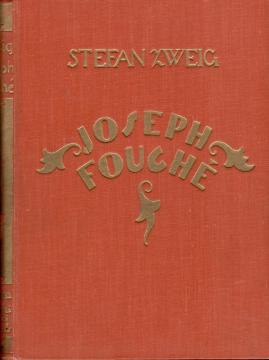
Joseph Fouché: Roman jednoga političara
Joseph Fouché (1930) is a brilliant biography of a brilliant and unscrupulous opportunist – a Minister of Police who served all regimes: the Revolution, Napoleon and the Bourbons, becoming a symbol of political cunning and moral emptiness.
The work is not a classic biography, but a brilliant psychological portrait of one of the most capable and immoral politicians in recent European history. Joseph Fouché (1759–1820), a former priest, became a radical Jacobin during the French Revolution, then the organizer of mass executions in Lyon, later Napoleon's Minister of Police, and after the fall of the Tsar he turned back to the Bourbons. Zweig masterfully portrays him as a man without ideals or convictions, but with an exceptional political instinct, cold-blooded intelligence and an absolute ability to adapt to any authority.
Zweig is not so much concerned with historical facts as with the psychology of power. He analyzes how Fouché manages to survive all regimes using surveillance, blackmail, manipulation and a perfect sense of the moment. The book is a fascinating study of political cynicism, ambition and human adaptability. The style is typically Zweigian – elegant, tense, psychologically profound and extremely readable.
In its Croatian edition from 1935, the book was a great success because it perfectly suited the intellectual climate of Europe on the eve of World War II – it showed how powerful people change with the wind, and ideologies serve only as masks. Joseph Fouché is considered one of Zweig's best biographical portraits (along with Marie Antoinette and Mary Stuart) and a classic of modern biographical literature. Today it is read as a timeless study of political amorality and the mechanisms of power.
One copy is available
- The cover is missing