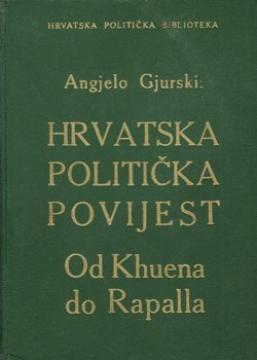
Hrvatska politička povijest od Khuena do Rapalla
The work depicts the political development of Croatia from the period of Khuen-Héderváry's rule to the Treaty of Rapallo, analyzing key conflicts, national processes, and relations within the Monarchy and the Kingdom of SHS.
In his work “Croatian Political History from Khuen to Rapallo”, Anđelo Gjurski covers one of the most dramatic and decisive periods in Croatian political history – the period from the end of the 19th century to the immediate post-World War I period. Through systematic analysis, he presents a series of events that shaped the foundations of modern Croatian politics, identity and statehood.
The central place is occupied by the period of Khuen-Héderváry’s administration, marked by strong centralization, repression and efforts to harmonize Croatian political life with the interests of the Hungarian part of the Monarchy. Gjurski presents the political mechanisms that limited the autonomy and the reactions of Croatian political forces – from right-wing and populism to the first forms of modern political organization.
Special attention is paid to the strengthening of the national movement, the development of the party system and changes in political culture at the beginning of the 20th century. The events during the Croatian-Serbian coalition, the growing tensions in the Monarchy, as well as the pivotal events related to the outbreak of war and the collapse of Austria-Hungary are covered.
The second part of the work focuses on Croatia's entry into the Yugoslav state union, analyzing the temporary structures of power after 1918 and the complex relations within the newly formed Kingdom of SHS. The final emphasis is placed on the Treaty of Rapallo (1920), which had a decisive influence on Croatian-Italian relations, borders and the international position of the eastern Adriatic area.
Gjurski provides an overview of political processes through a combination of archival material, journalism and analytical presentation, making the work a valuable contribution to the understanding of continuities and breaks in Croatian modern history.
One copy is available
- Cracked back
- Damaged covers