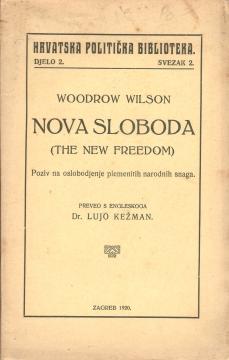
Nova sloboda: Poziv na oslobođenje plemenitih narodnih snaga
U delu „Nova sloboda“, Vilson iznosi svoj progresivni program za oslobođenje američkog društva od monopola, krupnog kapitala i korporativne dominacije i poziva na vraćanje ekonomske i političke slobode običnom čoveku.
Knjiga predstavlja politički i ekonomski program Vudroa Vilsona tokom njegove predsedničke kampanje 1912. godine i temelj njegove prve administracije. U njoj Vilson oštro kritikuje dominaciju velikih korporacija, fondova i monopola, koji su, po njegovom mišljenju, gušili istinsku ekonomsku slobodu malog preduzetnika, poljoprivrednika i običnog građanina. On se suprotstavlja tadašnjem preovlađujućem uverenju da su veliki monopoli neizbežan proizvod moderne ekonomije, tvrdeći da oni zapravo uništavaju konkurenciju, demokratiju i individualnu inicijativu.
Glavne ideje knjige uključuju:
- oslobađanje ekonomije od monopolske moći
- reformu bankarskog sistema
- jačanje antimonopolskih zakona
- demokratizaciju politike i smanjenje uticaja velikog kapitala na državu
- vraćanje slobode „malom čoveku“ i oslobađanje njegovih kreativnih energija
Vilsonov stil je elokventan, idealistički i moralistički - knjiga nije suv ekonomski traktat, već inspirativan poziv na obnovu američke demokratije. U hrvatskom kontekstu 1920. godine, neposredno nakon Prvog svetskog rata i stvaranja Kraljevine SHS, prevod je imao posebnu težinu. Vilson je tada bio izuzetno popularan među Hrvatima i drugim južnoslovenskim narodima zbog svoje podrške principu samoopredeljenja naroda i svoje uloge na Versajskoj mirovnoj konferenciji.
Delo je važno jer predstavlja ključni dokument američkog progresivizma početkom 20. veka i direktno je uticalo na Vilsonovu politiku Nove slobode, koja se suprotstavljala Teodoru Ruzveltu i njegovom Novom nacionalizmu. Danas se smatra klasičnim tekstom liberalne i progresivne misli.
One copy is available