Pjesme
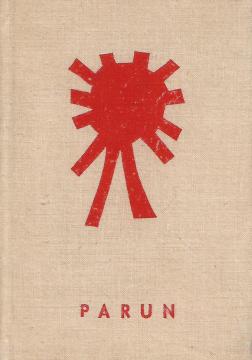
A selection of poetry by Vesna Parun (1922–2010), one of the most significant Croatian poets of the 20th century. The selection was made and the afterword written by Vesna Krmpotić. The book that solidified Vesna Parun's canonical status in Croatian liter
The book Poems by Vesna Parun represents a representative selection from her previous poetic opus. It was edited and an extensive afterword (pp. 135–141) was written by the then young poet Vesna Krmpotić. This is not a new collection of the author, but a carefully selected selection that includes poems from earlier books such as Zore i vihori, Crna maslina, Odrama vrejna, Koralj vratan moru and Vjetar Thakije.
Parun's poetry shines in this selection in the full intensity of its intimate and confessional expression. The central themes are passionate and painful love, the longing for absolute union that is always unattainable, erotic desire, a feeling of loneliness and existential anxiety. The poet often speaks from the position of a female voice, which at that time was brave and unconventional – honest, physical, vulnerable, but also strong. Along with love lyrics, there are motifs of nature (sea, olive tree, wind, earth) with which the poet identifies in a pantheistic way, as well as echoes of war and post-war experience, childhood and the transience of life.
Stylistically, she moves between free verse and more traditional rhythms, with a rich, picturesque language full of metaphors and symbols. Parun's strength lies in her ability to transform personal pain into a universal human drama, which has made her one of the most widely read and influential Croatian poets of the 20th century.
The afterword by Vesna Krmpotić adds additional value: the author Parun presents an archetypal, as "the South Slavic symbol of Vesna, a nourishing and healing womanhood that is simple and carefree like the land of blackberries". In doing so, Krmpotić provided an important early critical framework for understanding Parun's work.
The book was intended for a wider audience and significantly contributed to the canonization of Vesna Parun in the mid-1960s, when she was already established but still in full creative power. Today, it is appreciated among collectors and poetry lovers as a compact and high-quality introduction to her oeuvre.
One copy is available