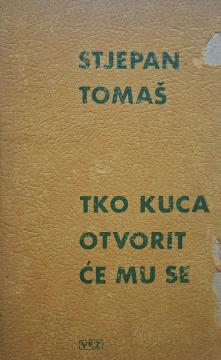
Tko kuca otvorit će mu se

Tko kuca otvorit će mu se

Stjepan Tomaš

The debut collection of short stories by Stjepan Tomaš explores inner turmoil, loneliness and a small man's search for meaning in provincial everyday life through an existentialist perspective.

Whoever Knocks Will Have the Door Opened (1975) is the first published book and debut collection of short stories by the contemporary Croatian writer Stjepan Tomaš. With this work, the author introduced himself to the Croatian literary public as a perceptive observer of human psychology and a subtle chronicler of life in small, provincial communities in Slavonia and Baranja. The collection brings a series of prose writings in which the focus is placed on the characters' inner experiences, their hidden fears, loneliness and lack of direction in social contexts. The title of the work, taken from a biblical quote, has an ironic and existentialist background: while the symbolic "knocking" signifies man's constant striving for knowledge, closeness and a way out of anxiety, the "opening" of the door is often absent or brings only disappointment. Tomaš's heroes are mostly ordinary, marginalized individuals whose silent conflicts take place within themselves. Stylistically, the collection is characterized by concise expression, atmospheric descriptions of the setting and a dense narrative structure. Whoever knocks will be opened to him is an important starting point in Tomaš's oeuvre because it heralds his later recognizable thematic preoccupations – the fates of people from the margins and the complexity of human relationships.

Editor
Pavle Blažek, Ivo Bogner
Graphics design
Petar Gol
Dimensions
20.5 x 13.5 cm
Pages
156
Publisher
Glas Slavonije, Osijek, 1975.
 
Latin alphabet. Hardcover.
Language: Croatian.

One copy is available

Condition:Used, very good condition
Damages or inconvenience notice:
  • Slight damage to the cover
 

Are you interested in another book? You can search the offer using our search engine or browse books by category.

You may also be interested in these titles

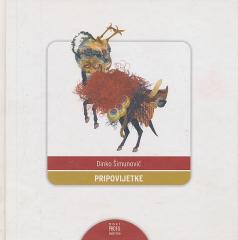
Pripovijetke

Pripovijetke

Dinko Šimunović

The collection "Short Stories" brings a representative selection of Šimunović's most famous prose, in which he depicts the tragedy of human destinies and the subtle psychology of characters through motifs of the Dalmatian hinterland, childhood, and social

Profil International, 2009.
Croatian. Latin alphabet. Hardcover.
9.62
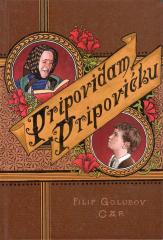
Pripovidam pripovićku

Pripovidam pripovićku

Filip Golubov-Car

A collection of authentic Baranja tales and folk songs. Through dialect, humor, and warm images of everyday life, the author preserves the spirit of Baranja, its people, customs, and rich oral tradition.

KUD Baranjski Šokci, 2023.
Croatian. Latin alphabet. Hardcover.
8.74
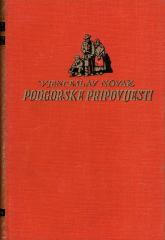
Podgorske pripovijesti

Podgorske pripovijesti

Vjenceslav Novak

A collection of realistic stories by Vjenceslav Novak about life in the poor hinterland of Senj. They depict the difficult everyday life of the people of Podgora, poverty, customs, family dramas and the struggle for dignity in the harsh Podgora environmen

Minerva nakladna knjižara, 1933.
Croatian. Latin alphabet. Hardcover.
6.34
Lurdsko čudo

Lurdsko čudo

Jean-Charles Reynaud

The Miracle of Lourdes is the story of a sick child and his mother who seek healing in Lourdes. Through the tension between faith and doubt, a moving story of grace, hope, and inner transformation is formed.

Knjižnica dobrih romana, 1930.
Croatian. Latin alphabet. Hardcover.
8.24
Pod starimi krovovi: Zapisci i ulomci iz plemenitaškoga svieta

Pod starimi krovovi: Zapisci i ulomci iz plemenitaškoga svieta

Ksaver Šandor Gjalski

Under Old Roofs (1886) is a collection of short stories by Ksaver Šandor Gjalski. It realistically and nostalgically depicts the decline of the Zagorje noble manors, old customs, and the conflict between generations during the collapse of feudal society.

Matica hrvatska, 1886.
Croatian. Latin alphabet. Hardcover.
17.24
Sabrana djela A. P. Čehova #4: Dan izvan grada

Sabrana djela A. P. Čehova #4: Dan izvan grada

Anton Pavlovič Čehov

The fourth volume of Chekhov's works contains novellas and humoresques, which were mostly written in 1886. Still writing for a fee in daily newspapers, Chekhov often had to subordinate his art to comprehensibility and cheap humor due to the taste of the r

Zora, 1959.
Croatian. Latin alphabet. Hardcover with dust jacket.
9.56