Vanbračna porodica

Vanbračna porodica

Milan Bosanac

This legal-sociological study analyzes the position of non-marital families, children born out of wedlock, and their parents. Bosanac examines the legal regulations, family relationships, and social status of non-marital unions in the SFRY.

The book Vanbračna porodica (The Non-Marital Family) by Prof. Dr. Milan Bosanac (published in 1976 by "Informator") is a comprehensive and thorough scholarly work in the fields of family law and the sociology of the family. At the time of its publication, this study represented a significant scientific contribution to the understanding and legal regulation of non-marital unions and the status of children born out of wedlock in the former Yugoslavia. In the book, the author provides a detailed analysis of the historical development of the non-marital family, societal attitudes, and legal evolution—tracing the shift from the past discrimination and subordinate status of children born out of wedlock to the gradual equalization of rights and obligations between non-marital unions and marriages. Bosanac analyzes the normative provisions of family legislation, property relations between partners in non-marital unions, maintenance issues, and the establishment and contesting of paternity and maternity. Written in a scholarly yet exceptionally clear and systematic style, Dr. Milan Bosanac’s Vanbračna porodica remains an invaluable document and reference work for lawyers, sociologists, and legal historians studying the evolution of family law and the transformation of family relations during the second half of the 20th century.

Dimensions
24 x 16 cm
Pages
319
Publisher
24 sata, Zagreb, 1976.
 
Latin alphabet. Paperback.
Language: Croatian.

One copy is available

Condition:Used, excellent condition
 

Are you interested in another book? You can search the offer using our search engine or browse books by category.

You may also be interested in these titles

Opća kultura III

Opća kultura III

Nikola Bačić

This is the third part of a series of textbooks that covered basic knowledge from different areas of human creativity, society and civilization.

VISOKA INDUSTRIJSKO-PEDAGOŠKA ŠKOLA U RIJECI, 1971.
Croatian. Latin alphabet. Paperback.
8.98
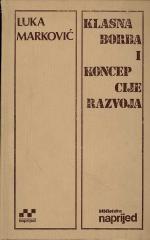
Klasna borba i koncepcije razvoja

Klasna borba i koncepcije razvoja

Luka Marković

This work deals with the themes of class struggle and different conceptions of social and economic development, providing insight into sociological and economic theories relevant to the time.

Naprijed, 1978.
Croatian. Latin alphabet. Hardcover.
5.98
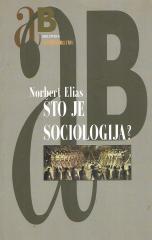
Što je sociologija?

Što je sociologija?

Norbert Elias

A classic work by one of the most influential sociologists of the 20th century, the founder of "figurative" or "process" sociology. The book is a programmatic manifesto against the then dominant structural-functionalist paradigm (Parsons) and pure positiv

Antibarbarus, 2007.
Croatian. Latin alphabet. Paperback.
8.26
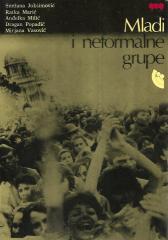
Mladi i neformalne grupe - U traganju za alternativom

Mladi i neformalne grupe - U traganju za alternativom

Snežana Joksimović, Ratka Marić, Anđelka Milić, Dragan Popadić, Mirjana Vasović

The book "Youth and informal groups: in search of an alternative" explores various aspects of subcultures and styles among young people during 1988.

Istraživačko-izdavački centar SSO Srbije, 1988.
Serbian. Latin alphabet. Paperback.
12.38
Kraj siromaštva: Ekonomske mogućnosti našeg doba

Kraj siromaštva: Ekonomske mogućnosti našeg doba

Jeffrey Sachs

In the book, economist Jeffrey Sachs presents an optimistic plan for eliminating extreme poverty by 2025. He argues that this is feasible with political will, because world wealth is growing, and poverty is not fate, but the result of inefficient systems.

Algoritam, 2007.
Croatian. Latin alphabet. Paperback.
9.78
Zdravo društvo

Zdravo društvo

Erich Fromm

In the book Healthy Society, Fromm tried to show that life in a democracy of the XX. century represents another type of escape from freedom. The analysis of this very escape, in which alienation is the central concept, forms a large part of this book.

Rad, 1963.
Serbian. Latin alphabet. Hardcover.
8.42