Aura
A young historian is editing the memoirs of a late general in a gloomy house. Seduced by a mysterious girl named Aura, he is slowly drawn into a sinister web of the occult, myth, and eternal youth.
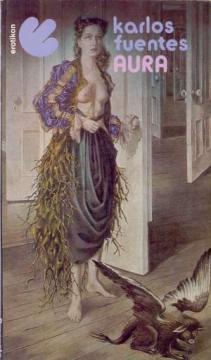
"Aura" (originally published in 1962) is one of Carlos Fuentes’s most renowned and sophisticated works, as well as a masterpiece of Hispanic-American magical realism and fantastic literature. The story follows Felipe Montero, a young and talented historian who accepts an unusual, well-paid job: to complete and edit the memoirs of the late General Llorente at the behest of the general's elderly widow, Señora Consuelo. Felipe moves into a mystical, dark, and secluded house in the city's historic center, a place defined by absolute silence and sensory isolation. There, he meets Consuelo’s niece, Aura—a captivating, enigmatic young woman with green eyes for whom Felipe soon develops a passionate obsession. However, as Felipe delves deeper into the general’s manuscripts—noticing strange coincidences and the rituals performed by the elderly Consuelo—the boundaries between past and present, reality and dream, and identity and reincarnation begin to dangerously collapse. The novel’s distinctiveness lies in its specific narrative technique: it is written in the second person singular ("you"), directly drawing the reader into the role of the protagonist and heightening the sense of claustrophobia, erotic tension, and mystery. "Aura" is a poignant and eerie study of obsession, the passage of time, the desire for eternal youth, and the inevitability of fate. The 1978 edition in the Erotikon series highlights precisely the subtle erotic and mystical dimension of this timeless prose.
One copy is available