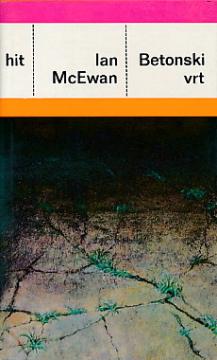
Betonski vrt

Betonski vrt

Ian Mcewan

The Concrete Garden by Ian McEwan is a novel about four children who are left alone after the death of their parents. In isolation, they create their own world, and the boundaries between childhood and adulthood gradually blur.

The Concrete Garden is the first novel by British author Ian McEwan and one of his most famous works. The novel explores themes of growing up, isolation, family relationships, and the psychological consequences of living without adult supervision. Set in a gloomy suburb marked by the demolition of old houses and the spread of concrete surfaces, the novel creates an atmosphere of alienation that strongly influences the behavior of the characters.

The plot centers on four children – Julie, Jack, Sue, and Tom – who are left alone in their family home after the death of their parents. Fearing that social services will separate them, they decide to cover up their mother's death and continue living without adult help. As time passes, the children create their own rules and organize their lives according to their own needs, gradually moving away from social norms.

The narrator Jack describes events from his perspective, revealing the complex emotional and psychological changes that occur in the family. Isolation from the outside world leads to changes in the relationships between the children, and the boundaries between childish and adult behavior become increasingly blurred. The novel shows how lack of authority and social constraints can lead to unexpected and disturbing consequences.

The titular "concrete garden" symbolizes a world without natural development and emotional warmth. The concrete represents the confinement, coldness, and breakdown of traditional family values, as children attempt to create their own space of freedom within such an environment. McEwan explores the darker sides of human nature and the transition from childhood to adulthood through symbolism and psychological analysis.

The novel is characterized by a simple but suggestive style and an atmosphere of tension that lasts until the very end. Due to its provocative themes, psychological depth, and powerful depiction of family relationships, The Concrete Garden is considered one of the most significant novels of contemporary British literature.

Original title
The Cement Garden
Translation
Ivan Matković
Editor
Zlatko Crnković
Graphics design
Alfred Pal
Dimensions
20 x 13 cm
Pages
162
Publisher
Znanje, Zagreb, 1984.
 
Latin alphabet. Hardcover with dust jacket.
Language: Croatian.

One copy is available

Condition:Used, excellent condition
 

Are you interested in another book? You can search the offer using our search engine or browse books by category.

You may also be interested in these titles

Kako to reći Liddy: jetka komedija

Kako to reći Liddy: jetka komedija

Anne Fine

Imagine four sisters who share everything from shopping marathons and family dinners to the most intimate secrets. Heather, Bridie, Stella and Liddy Palmer – unbreakable, loyal, impenetrable. Or so they think...

Znanje, 1998.
Croatian. Latin alphabet. Paperback.
3.46
Družba Isusova

Družba Isusova

Jiří Šotola

The Society of Jesus (1969) by Jiří Šotola, the debut work of the Czech poet, is a historical novel set during the Counter-Reformation, which subtly alludes to contemporary conditions in Czechoslovakia under communism.

Znanje, 1975.
Croatian. Latin alphabet. Hardcover with dust jacket.
2.98
Asmodejev šal

Asmodejev šal

Ivan Aralica

Asmodeus' Scarf by Ivan Aralica is a novel that, through a symbolic and historical story, explores human nature, moral dilemmas, political conflicts, and the consequences of ideological divisions in Croatian society.

Znanje, 1988.
Croatian. Latin alphabet. Hardcover with dust jacket.
4.26
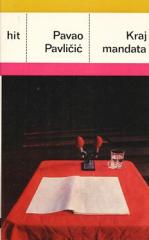
Kraj mandata

Kraj mandata

Pavao Pavličić

The End of the Mandate by Pavle Pavličić is a crime novel in which the seemingly routine end of a local official's term turns into an investigation filled with political conflicts, secrets, and crime.

Znanje, 1984.
Croatian. Latin alphabet. Hardcover with dust jacket.
3.56 - 4.38
Garman & Worse

Garman & Worse

Alexander L. Kielland

Alexander Kielland's Garman & Worse is a social novel about a wealthy merchant family in a Norwegian port city. Through their fates, the author criticizes the hypocrisy, class differences, and moral dilemmas of bourgeois society.

Znanje, 1985.
Croatian. Latin alphabet. Hardcover with dust jacket.
5.484.11
Duše robova

Duše robova

Ivan Aralica

Ivan Aralica's Souls of Slaves is a historical novel depicting the life of the Croatian people under Ottoman rule. The work explores issues of freedom, identity, religion, and human dignity.

Znanje, 1988.
Croatian. Latin alphabet. Hardcover with dust jacket.
5.30