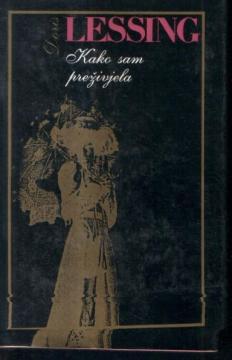
Kako sam preživjela

Kako sam preživjela

Doris Lessing

The novel How I Survived (1974) by Doris Lessing is a dystopian novel that follows the unnamed narrator, a middle-aged woman, in a futuristic city collapsing due to social and economic collapse.

Through her memoirs, Lessing explores themes of survival, the loss of civilized norms, and inner transformation in a chaotic world.

The narrator lives in an apartment, watching society fall apart—gangs roam the streets, food and power shortages become commonplace, and the government loses control. Unexpectedly, she is brought into the care of Emily, an adolescent, and her dog Hugo, beginning her emotional and moral connection with the girl. As Emily grows up, the narrator witnesses her struggle with love, rebellion, and adjusting to a harsh reality. At the same time, the narrator experiences visions through the walls of her apartment, entering a symbolic, surreal world that reveals deeper truths about herself and humanity.

The novel combines a realistic depiction of social collapse with psychological and mystical elements, exploring themes of motherhood, responsibility, and hope in the midst of ruin. Lessing uses an introspective style to emphasize the fragility of civilization and the strength of the human spirit. The work is notable for its dystopian vision and feminist portrayal of women's inner strength.

Original title
The Memoirs of a Survivor
Translation
Mate Maras
Editor
Mirjana Buljan
Dimensions
21 x 14 cm
Pages
194
Publisher
Globus, Zagreb, 1985.
 
Latin alphabet. Hardcover with dust jacket.
Language: Croatian.

Two copies are available

Copy number 1

Condition:Used, excellent condition

Copy number 2

Condition:Used, excellent condition
 

Are you interested in another book? You can search the offer using our search engine or browse books by category.

You may also be interested in these titles

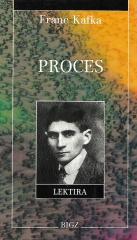
Proces

Proces

Franz Kafka

Kafka wrote The Process between 1914 and 1915, published posthumously in 1925. The novel is unfinished but with an added final chapter by Max Brod. Edition with a foreword by B. Živojinović and an afterword by Walter Killi.

BIGZ, 1990.
Serbian. Latin alphabet. Paperback.
4.26
Strasti i druge pripovijetke

Strasti i druge pripovijetke

Isaac Bashevis Singer

Winner of the Nobel Prize for Literature in 1978, Isaac Bashevis Singer is a prolific writer of novellas and short stories. And in this collection of short stories, the author's penchant for mysticism, grotesque, folklore and eroticism is expressed.

Svjetlost, 1986.
Croatian. Latin alphabet. Hardcover with dust jacket.
6.42
Zagrepčanka

Zagrepčanka

Branislav Glumac

Branislav Glumac published a novel without periods or commas in 1974, as the relentless stream of thought of a young rebel. Published in socialist Yugoslavia, the work caused a scandal with its openness and became a classic about generational rebellion.

IROS, 1986.
Croatian. Latin alphabet. Hardcover.
8.24
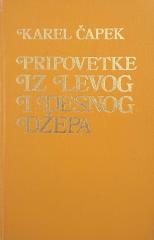
Pripovetke iz levog i desnog džepa

Pripovetke iz levog i desnog džepa

Karel Čapek

These stories deal with different topics, although most deal with different criminal acts, from fraud and fortune-telling to marriage fraud and murder.

Jugoslavijapublik, 1980.
Croatian. Latin alphabet. Hardcover.
5.22
V.

V.

Thomas Pynchon

The novel represents a journey into an alternative world – a world that we all belong to from time to time, but of which we would not want to be a part, a world of paranoia and alienation that we are not entirely sure is just an alternative or the bare tr

Čarobna knjiga, 2010.
Serbian. Latin alphabet. Paperback.
21.98
Lope de Aguirre - Princ slobode

Lope de Aguirre - Princ slobode

Miguel Otero Silva

Lope de Aguirre, Princ slobode je odraz postojanja american zajednice and stvaranja velike individualne figure koja u svijetu krvi i prijestupa poprima proporcije pjesničke alegorije.

Otokar Keršovani, 1983.
Croatian. Latin alphabet. Hardcover with dust jacket.
8.98