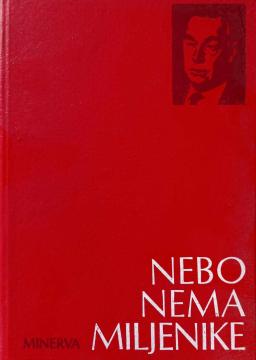
Nebo nema miljenike

Nebo nema miljenike

Erich Maria Remarque

Original title
Der himmel kennt keine gunstlinge
Translation
Miloje Legetić
Editor
Milivoje Marković
Dimensions
20 x 14.5 cm
Pages
268
Publisher
Minerva, Subotica, 1986.
 
Distribution: 15,000 copies
 
Latin alphabet. Hardcover.
Language: Serbian.
ISBN
8-67-099010-5

One copy is available

Condition:Used, excellent condition
 

Are you interested in another book? You can search the offer using our search engine or browse books by category.

You may also be interested in these titles

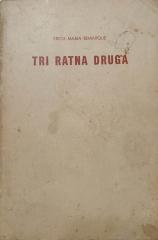
Tri ratna druga

Tri ratna druga

Erich Maria Remarque

Tri druga iz Prvog svetskog rata - Robi, Oto i Gotfrid - pokušavaju da prežive u Vajmarskoj Nemačkoj 1928. godine. Usred ekonomske krize, siromaštva i političkog nasilja, njihovo prijateljstvo je njihovo jedino utočište.

Minerva, 1953.
Serbian. Latin alphabet. Paperback.
1.99
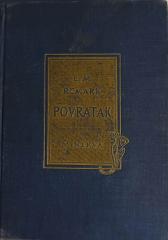
Povratak

Povratak

Erich Maria Remarque
Minerva, 1955.
Croatian. Latin alphabet. Hardcover.
1.62 - 1.98
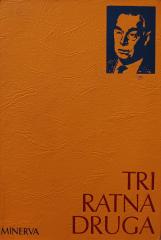
Tri ratna druga

Tri ratna druga

Erich Maria Remarque

Three World War I comrades—Robbie, Otto, and Gottfried—try to survive in Weimar Germany in 1928. Amid economic crisis, poverty, and political violence, their friendship is their only refuge.

Minerva, 1978.
Serbian. Latin alphabet. Hardcover.
3.99 - 8.98
Usta puna zemlje

Usta puna zemlje

Branimir Šćepanović

The novel "Usta puna zemlje" (1970), the masterpiece of the Serbian writer Branimir Šćepanović, is a psychologically in-depth explorer of the limits of the human soul, solitude and existential freedom, reminiscent of Kafka and Camus.

BIGZ, 1987.
Serbian. Latin alphabet. Paperback.
3.98
Proces

Proces

Franz Kafka

Kafka wrote The Process between 1914 and 1915, published posthumously in 1925. The novel is unfinished but with an added final chapter by Max Brod. Edition with a foreword by B. Živojinović and an afterword by Walter Killi.

BIGZ, 1990.
Serbian. Latin alphabet. Paperback.
4.26
Deobe 1-3

Deobe 1-3

Dobrica Ćosić

This work, awarded the NIN Prize for that year, is considered one of the most significant in Serbian literature after World War II.

Prosveta, 1961.
Serbian. Cyrillic alphabet. Hardcover with dust jacket.
The book consists of 3 volumes
11.42