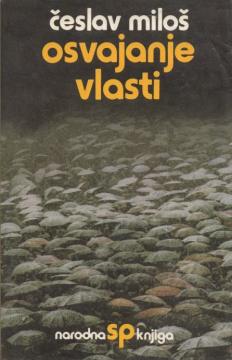
Osvajanje vlasti

Osvajanje vlasti

Czesław Miłosz

A brilliant political novel by Nobel Prize winner Czesław Miłosz that dissects the establishment of communist rule in Poland at the end of World War II. Through the fates of the characters, it depicts moral dilemmas and collaboration.

The masterpiece of political prose, “The Conquest of Power” by the distinguished Polish writer and Nobel Prize winner for Literature Czesław Miłosz, is a powerful novel written during the writer’s period of exile in Paris. The plot covers the dramatic period of the end of World War II and the first post-war year in Poland, following the moment when, under Soviet influence, the fate of a nation is being torn apart and a new totalitarian order is being established.

Through a gallery of striking characters – from disillusioned intellectuals and idealists to opportunists and political commissars – Miłosz shows with exceptional psychological penetration and moral clarity how politics and repressive systems change human nature. The novel uniquely depicts moments of choice between resistance, suffering and necessary compromises, and vividly depicts the mechanisms by which totalitarianism dominates society.

The work represents the perfect narrative complement to his famous essayistic anatomy of Stalinism and is an indispensable, superbly written read for all lovers of serious historical fiction, political philosophy, and profound human dramas of the 20th century.

Original title
Zdobycie władzy
Translation
Andrija Grosberger
Editor
RadoslavMirosavljev
Graphics design
Zoran Branković
Dimensions
21 x 12 cm
Pages
185
Publisher
Narodna knjiga, Beograd, 1983.
 
Distribution: 5,000 copies
 
Latin alphabet. Paperback with dust jacket.
Language: Croatian.

One copy is available

Condition:Used, excellent condition
 

Are you interested in another book? You can search the offer using our search engine or browse books by category.

You may also be interested in these titles

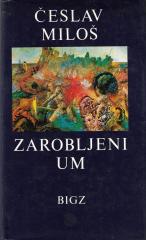
Zarobljeni um

Zarobljeni um

Czesław Miłosz

A cult essay study by Nobel laureate Czesław Miłosz on intellectuals and totalitarianism. The work brilliantly dissects the mechanisms by which Stalinism and ideology enslave human consciousness.

BIGZ, 1987.
Serbian. Latin alphabet. Hardcover with dust jacket.
11.488.04 - 12.42
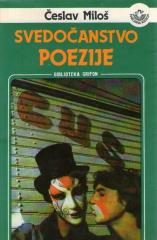
Svedočanstvo poezije

Svedočanstvo poezije

Czesław Miłosz

A collection of lectures by Czesław Miłosz that explores the role of the poet in a world marked by historical tragedies and totalitarianisms, emphasizing the ethical responsibility of art towards reality.

Narodna knjiga, 1985.
Serbian. Latin alphabet. Paperback with dust jacket.
9.36
Why We Suck: A Feel Good Guide to Staying Fat, Loud, Lazy and Stupid

Why We Suck: A Feel Good Guide to Staying Fat, Loud, Lazy and Stupid

Denis Leary

A satirical, uncompromising and highly provocative book by Denis Leary, comedian and stand-up artist, written in the form of a long, cynical, swearing and aggressive monologue that reads like an extended stand-up performance on paper.

Penguin books, 2009.
English. Latin alphabet. Paperback.
6.36
Crno proljeće / Svijet seksa

Crno proljeće / Svijet seksa

Henry Miller

Black Spring is a collection of essays and short stories by the American writer Henry Miller, which was first published in 1936. "The World of Sex" is Miller's second well-known work, which is particularly controversial due to its explicit content.

Otokar Keršovani, 1967.
Croatian. Latin alphabet. Hardcover.
6.32 - 8.36
Život jednoga umjetnika - Maksim Gorki

Život jednoga umjetnika - Maksim Gorki

Ilja Gruzdev

"The Life of an Artist", by Ilya Gruzdev, is a biographical work that deals with the life and work of Maxim Gorky, one of the most important Russian writers and social reformers.

Naklada Binoza, 1936.
Croatian. Latin alphabet. Paperback with dust jacket.
22.46
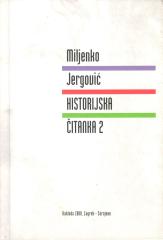
Historijska čitanka 2

Historijska čitanka 2

Miljenko Jergović

The first edition of the second part of the series with 5 new (bonus) stories by a famous writer and journalist. "This book completes the 'Historical Reader', a project - a column started on the pages of the Sarajevo magazine Dani, shortly after the end o

Durieux, 2004.
Croatian. Latin alphabet. Hardcover.
7.32