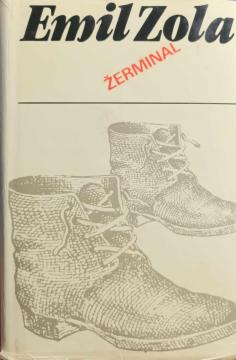
Žerminal

Žerminal

Émile Zola

In his best work, Germinal, Émile Zola realistically described the inhuman living and working conditions of miners in northern France in the 60s of the 19th century.

Germinal is a novel published in 1885, one of the most important in Zola's "Rougon-Macquart" cycle. The main character, Étienne Lantier, a young worker who lost his job due to his impetuous nature, comes to the mining settlement of Montsou and gets a job at the Voreux mine. There, he witnesses the brutal working conditions, injustice, and misery that plague the miners' families. Étienne becomes increasingly politically aware, embraces socialist ideas, and organizes a strike in an effort to get the workers better conditions and wages.

The strike, initially full of hope, soon develops into a struggle for bare survival. The government and the mining employers brutally suppress the rebellion, and the strikers and their families suffer hunger and death. The mine becomes a symbol of the relentless force that grinds the workers down. Despite the defeat, the novel ends with symbolic hope: Germinal - a month in the French revolutionary calendar that marks the awakening of nature - suggests that, like spring, workers' resistance will one day flourish again.

In "Germinal," Zola masterfully combines a naturalistic depiction of misery with strong emotion and social engagement. The work remains one of the most powerful depictions of social injustice in literature.

Original title
Germinal
Translation
Dušan Matić
Editor
Radovan Ždrale
Graphics design
Bogdan Kršić
Dimensions
20 x 14 cm
Pages
490
Publisher
Matica srpska, Novi Sad, 1986.
 
Distribution: 10,000 copies
 
Latin alphabet. Hardcover with dust jacket.
Language: Serbian.

One copy is available

Condition:Used, excellent condition
Damages or inconvenience notice:
  • Traces of patina
 

Are you interested in another book? You can search the offer using our search engine or browse books by category.

You may also be interested in these titles

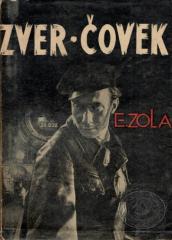
Zver-čovek

Zver-čovek

Émile Zola

Roman istražuje destruktivne sile nasljeđa, strasti i nasilja u modernom industrijskom društvu. Radnja se odvija uglavnom na željeznici, simbolu brzine, sudbine i neizbježne propasti. “Čovjek zvijer” je prvi opis zločina u industrijskom svijetu.

Nolit, 1940.
Serbian. Latin alphabet. Paperback with dust jacket.
56.32
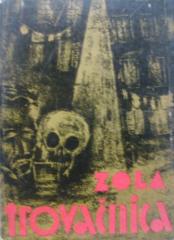
Trovačnica

Trovačnica

Émile Zola

Roman Trovačnica objavljivan je u nastavcima tijekom 1876., a u obliku knjige 1877. To je priča o ženskoj borbi za sreću u radničkoj klasi Pariza.

Rad, 1955.
Serbian. Latin alphabet. Hardcover with dust jacket.
8.62 - 9.99
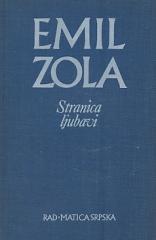
Stranica ljubavi

Stranica ljubavi

Émile Zola
Rad, 1974.
Serbian. Latin alphabet. Hardcover.
5.84
Crna kutija

Crna kutija

Amos Oz

The Black Box is a kaleidoscope of married life and love relationships. It is a novel that implicitly speaks about all of us.

Hena Com, 2001.
Croatian. Latin alphabet. Hardcover.
10.98
Stotina godina (antikronika)

Stotina godina (antikronika)

Dario Harjaček

The novel One Hundred Years by Dario Harjaček provides a panoramic view of Trešnjevka and its inhabitants through a century of changes, ideologies, and human destinies – a mosaic of Zagreb in which life, art, and history intertwine.

Oceanmore, 2025.
Croatian. Latin alphabet. Paperback.
13.42
Usta puna zemlje

Usta puna zemlje

Branimir Šćepanović

The novel "Usta puna zemlje" (1970), the masterpiece of the Serbian writer Branimir Šćepanović, is a psychologically in-depth explorer of the limits of the human soul, solitude and existential freedom, reminiscent of Kafka and Camus.

BIGZ, 1987.
Serbian. Latin alphabet. Paperback.
3.98