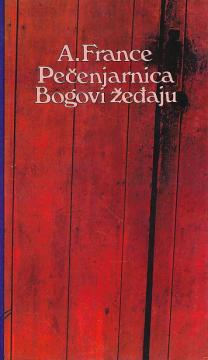
Pečenjarnica / Bogovi žeđaju

Pečenjarnica / Bogovi žeđaju

Anatole France

In the novels The Oven and Gods Thirst, Anatole France shows the path from reason and humanism to fanaticism, criticizing social prejudices, dogmatism and abuse of power.

The novels Pečenjarnica and Gods thirst are among the most significant works of the French writer Anatole France, winner of the Nobel Prize for Literature. Although they are set in different historical periods, both novels are connected by the author's criticism of society, fanaticism and blind acceptance of authority.

In Pečenjarnica, we follow the growth of Jakov Menetrie who, under the influence of the learned priest Jérôme Coignard, learns about philosophy, literature and science and develops critical thinking. The novel is imbued with humor, irony and a satirical depiction of human weaknesses, and emphasizes the importance of reason, education and tolerance.

In contrast, Gods thirst depicts the dark side of human nature through the character of the painter Évariste Gamelin, who during the French Revolution turns from an idealist into a fanatical judge of the Revolutionary Court. Believing that he serves justice, he gradually loses compassion and turns into a perpetrator of terror, only to eventually become a victim of the system he served.

Both novels explore the relationship between the individual and society and warn of the dangers of dogmatism, political and religious extremism, and abuse of power. France combines historical themes with philosophical reflections, showing that humanity, freedom of thought and a critical attitude towards authorities are the fundamental values ​​of every society. His works remain relevant because they warn that fanaticism can arise at any time when reason gives way to blind ideology.

Original title
La Rôtisserie de la reine Pédauque / Les dieux ont soif
Translation
Branka Hergešić, Ivo Hergešić
Editor
Ivo Hergešić
Graphics design
Alfred Pal
Dimensions
21 x 12.5 cm
Pages
416
Publisher
Sveučilišna naklada Liber (SNL), Zagreb, 1977.
 
Distribution: 7,000 copies
 
Latin alphabet. Hardcover with dust jacket.
Language: Croatian.

Two copies are available

Copy number 1

Condition:Used, excellent condition

Copy number 2

Condition:Used, excellent condition
Damages or inconvenience notice:
  • Traces of patina
 

Are you interested in another book? You can search the offer using our search engine or browse books by category.

You may also be interested in these titles

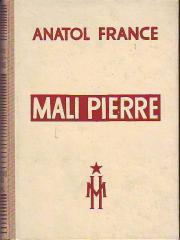
Mali Pierre

Mali Pierre

Anatole France

Anatole France’s novel *Little Pierre* (1918) is an autobiographical work in which the author, through gentle irony and reminiscence, brings to life the idyllic and instructive moments of his own childhood in Paris.

Matica hrvatska, 1946.
Croatian. Latin alphabet. Hardcover.
6.24
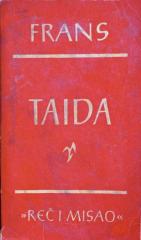
Taida: roman iz aleksandrijskih vremena

Taida: roman iz aleksandrijskih vremena

Anatole France

The novel Taida, published in 1890, is one of the most famous works by French Nobel Prize winner Anatole France. The work is inspired by the legend of Saint Taida of Egypt, a 4th-century courtesan who converted to Christianity.

Rad, 1961.
Serbian. Latin alphabet. Paperback.
1.99
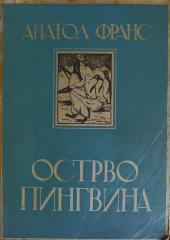
Ostrvo pingvina

Ostrvo pingvina

Anatole France
Kultura, 1946.
Serbian. Cyrillic alphabet. Paperback.
3.99
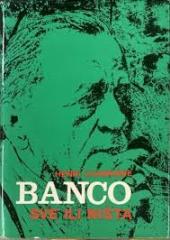
Banco: Sve ili ništa

Banco: Sve ili ništa

Henri Charrière

In his book Banco – All or Nothing, Henri Charrière describes his life after escaping from prison in French Guiana. Seeking redemption, he embarks on an honest life, but through numerous adventures and shady dealings, he once again tests the limits of fre

Alfa, 1977.
Croatian. Latin alphabet. Hardcover with dust jacket.
11.56
Pričaj im o bitkama, kraljevima i slonovima

Pričaj im o bitkama, kraljevima i slonovima

Mathias Énard

In 1506, Michelangelo Buonarroti was invited by Sultan Bayezid II to design a bridge across the Golden Horn in Constantinople. Furious at Pope Julius II who had humiliated him and refused to pay, Michelangelo left Rome and arrived by ship in Constantinopl

Profil Knjiga, 2012.
Croatian. Latin alphabet. Paperback.
7.445.22 - 7.467.44
Za ljubav sina

Za ljubav sina

Herve Bazin

An intimate, autobiographical drama about fatherhood, guilt, and complex family relationships. The main character is Daniel, a middle-aged widower who is raising three children alone: ​​twins (an older son and a daughter) and the youngest son Bruno.

Svjetlost, 1965.
Croatian. Latin alphabet. Paperback.
2.76