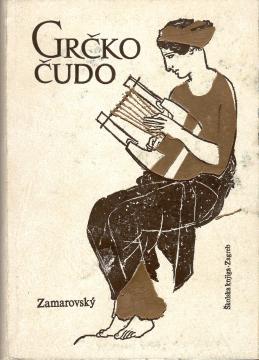
Grčko čudo
Rare book

Grčko čudo

Vojtech Zamarovsky

A comprehensive work that explores the extraordinary development of ancient Greek civilization and its lasting influence on Western culture. The author analyzes in detail various aspects of Greek society to demonstrate the uniqueness and significance of t

The book begins with an overview of Greek mythology, providing insight into the wealth of stories and legends that shaped Greek consciousness and identity. Zamarovsky investigates how myths influenced the everyday life of the Greeks and their understanding of the world.​​

An analysis of Greek philosophy follows, where the author emphasizes the contribution of thinkers such as Socrates, Plato and Aristotle. Their ideas laid the foundations of the Western philosophical tradition and science, and Zamarovsky explains how their reflections shaped the ethical and moral values ​​of society.​

In the field of art, the book describes in detail the development of architecture, sculpture and painting. The author emphasizes innovations such as the Doric and Ionic styles in architecture and realism and idealism in sculpture, which is visible in works such as the Parthenon and the sculptures of Phidias.

The historical section of the book focuses on key events such as the Greco-Persian Wars, where Zamarovsky analyzes the battles and strategies that led to the Greek victory over the superior Persian forces. These conflicts not only preserved Greek independence, but also allowed culture and democracy to flourish in Athens.

Throughout the work, the author emphasizes how the Greeks managed to create a civilization that, despite its fragmentation into many polises, achieved incredible achievements in various fields. Zamarovsky concludes that it was this combination of political freedom, critical thinking, and aesthetic sensitivity that led to the emergence of the "Greek miracle", the echoes of which still shape the modern world today.

Original title
Grecky zazrak
Translation
Predrag Jirsak, Mirko Jirsak
Editor
Ive Mažuran
Illustrations
Boris Šarotar
Graphics design
Živko Haramija
Dimensions
24 x 17 cm
Pages
522
Publisher
Školska knjiga, Zagreb, 1978.
 
Latin alphabet. Hardcover.
Language: Croatian.

One copy is available

Condition:Used, excellent condition
 

Are you interested in another book? You can search the offer using our search engine or browse books by category.

You may also be interested in these titles

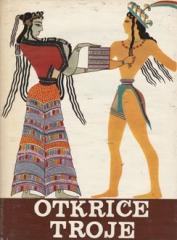
Otkriće Troje

Otkriće Troje

Vojtech Zamarovsky

„Die Entdeckung Trojas“ von Vojtěch Zamarovski ist ein Buch, das ausführlich die Geschichte der Entdeckung der antiken Stadt Troja beschreibt, mit besonderem Schwerpunkt auf den archäologischen Forschungen von Heinrich Schliemann.

Epoha, 1964.
Croatian. Latin alphabet. Hardcover with dust jacket.
8.566.85
Kraj vremena: Revizija proročanstva Maya

Kraj vremena: Revizija proročanstva Maya

Adrian Gilbert

Der britische Autor Adrian Gilbert (Mitautor von „Die Maya-Prophezeiungen“ aus dem Jahr 1995) bietet in „Das Ende der Zeit“ die gründlichste und nüchternste moderne Interpretation des Maya-Kalenders und der sogenannten „Prophezeiung von 2012“ und lehnt di

Stari grad, 2009.
Croatian. Latin alphabet. Hardcover.
18.2214.58 - 18.2414.59
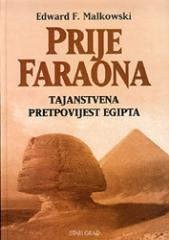
Prije faraona: Tajanstvena pretpovijest Egipta

Prije faraona: Tajanstvena pretpovijest Egipta

Edward F. Malkowski

Der amerikanische Forscher Edward Malkowski behauptet in seinem Buch „Before the Pharaohs“, dass die ägyptische Zivilisation die Nachfolgerin einer viel älteren, technologisch fortgeschritteneren Kultur sei, die mindestens 10.000 bis 12.000 Jahre vor der

Stari grad, 2006.
Croatian. Latin alphabet. Hardcover.
16.2412.99 - 16.32
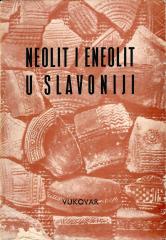
Neolit i eneolit u Slavoniji

Neolit i eneolit u Slavoniji

Stojan Dimitrijević, Bogdan Brukner, Nikola Tasić, Vladimir Mirosavljević

Der Tagungsband des Symposiums „Neolithikum und Äneolithikum in Slawonien“, das am 4. und 5. Juni 1966 in Vukovar stattfand, vereint Beiträge über neolithische und äneolithische Kulturen, materielle Funde und regionale Verbindungen.

Gradski muzej Vukovar, 1969.
Croatian. Latin alphabet. Paperback with dust jacket.
13.54
Arktička pradomovina Veda

Arktička pradomovina Veda

Bal Gandahar Tilak

Das Buch „Die arktische Heimat der Veden“ (1903) des indischen Gelehrten Tilak stellte die Hypothese auf, dass die alten Arier, die Autoren des Rigveda, aus der Arktis stammten. Obwohl umstritten, bleibt das Buch für die Erforschung vedischer Texte und de

NIRO Književne novine, 1987.
Serbian. Latin alphabet. Paperback.
17.56
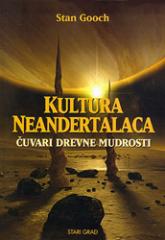
Kultura neandertalaca: Čuvari drevne mudrosti

Kultura neandertalaca: Čuvari drevne mudrosti

U ovoj snažno dokumentovanoj knjizi, britanski psiholog i istraživač tvrdi da su neandertalci bili nosioci starije, moćnije i duhovno bogatije kulture od kromanjonskog („modernog“ čoveka), i da je upravo njihova tradicija činila temelj cele kasnije civil

Stari grad, 2006.
Croatian. Latin alphabet. Hardcover.
14.2410.68 - 14.28