Kleopatra: Egipatska kraljica
The novel tells the lavish story of the last Egyptian queen, a woman of exceptional intelligence and beauty, whose life, love affairs with Caesar and Antony, and tragic death symbolize the collision of power, passion, and fate.
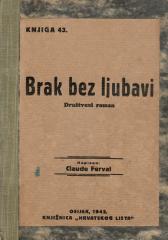
In the historical novel Cleopatra, French writer Claude Ferval (real name Charles Forot) brings to life the character of one of the most famous women of the ancient world – Queen of Egypt Cleopatra VII. Set in the turbulent era of the end of Egyptian independence and the rise of Roman power, the story combines historical facts with a romantic and psychological portrayal of a woman who marked eras with her intelligence, charm and political ability.
Ferval portrays Cleopatra not only as a seductress, but as a complex personality – a ruler who tried to save Egypt through diplomatic ties with the most powerful Romans, Julius Caesar and later Mark Antony. Her loves are not depicted as pure passion, but as part of a wider struggle for the survival of the people and the state.
The novel abounds in images of the luxury of Alexandria, political intrigue, wars and betrayals, but also intimate scenes that show the human side of the legendary queen. Cleopatra’s fate ends tragically with suicide – an act of pride and dignity, by which she refuses to live as a slave to the Roman Empire.
Ferval successfully combines historical accuracy and the spirit of a novel, creating a readable, emotionally powerful work about a woman who has transcended the boundaries of time. Cleopatra is also a story of power and powerlessness, of the struggle between reason and passion, but also of the price that history demands of those who dare to be free.
One copy is available