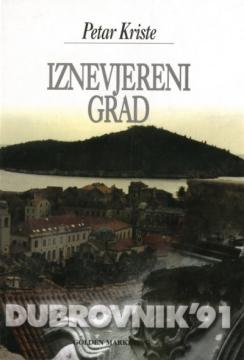
Iznevjereni grad: Dubrovnik 1991
A memoir by Petar Krista, a member of the Dubrovnik Crisis Staff, about the first months of the siege of the city. The work records the political background, military reality, and personal drama of the defense of Dubrovnik.
The Betrayed City: Dubrovnik 1991 by Petra Kriste is one of the earliest and most authentic testimonies about the beginning of the Homeland War in Dubrovnik. Kriste, born on Šipan in 1936, a politician and publicist, was the first Croatian Minister of Defense and at the beginning of the war a member of the Dubrovnik Crisis Staff. It is precisely this position that gives his book a special documentary weight: he recorded events from the inside, from the perspective of a man who was at once an observer, participant and witness.
The book covers September, October and November 1991, a period in which Dubrovnik remained completely cut off, exposed to attacks by the JNA, Montenegrin and Serbian paramilitary formations. Kriste brings diary entries, interviews, official information, impressions and notes that show how the city tried to defend itself without weapons, logistics and political support. Particularly powerful parts describe the day of the fall of Sustjepan, the shelling of the historic core, the humanitarian crisis and the moral strength of the people of Dubrovnik.
The authenticity of the book stems from several levels: the author is at the very center of political and organizational activity; he cites specific names, events, and decisions; and subsequent trials, including his testimony at the Hague Tribunal, confirm the authenticity of his notes. Kriste speaks openly about the failures, incompetence, and slow reactions of the then leadership, but also about the courage of the defenders and citizens.
The Betrayed City is not only a war diary, but also a chronicle of disappointed expectations — of a city that believed it would be spared, of politicians who expected reason, and of residents who found themselves in a war zone overnight. The memoirs today serve as a valuable historical source about one of the key moments in the defense of Croatia's southern border and the identity of a city under siege.
One copy is available