Gog
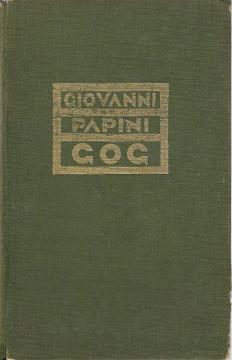
Papini's "Gog", in the edition with an afterword by Mate Ujević, brings a provocative collection of satirical and philosophical writings that expose human weaknesses, social absurdities and the spiritual crisis of modern man.
In Gog, Giovanni Papini creates a work that is at once a novel, a collection of essays, and a series of grotesque visions of the modern world. The book is structured as a series of encounters, thoughtful conversations, and witty, often brutally honest comments on human nature, science, religion, politics, and culture.
The protagonist, the eccentric millionaire Gog, leads the reader through a series of episodes in which he meets famous historical and cultural figures and makes provocative observations about a civilization that is rapidly losing its moral and spiritual foothold. Papini uses irony, hyperbole, and absurdity as his primary means of criticism.
This edition is special in that it contains an afterword by Mate Ujević, who places Papini's work in the broader context of European literary modernization and interprets it as an expression of the author's constant conflict with established norms and the spiritual emptiness of the era. Ujević emphasizes Gog's symbolic importance: he is both an observer and a victim of the modern world, a figure who exposes the contradictions of progress.
Gog is one of Papini's best-known and most influential works and a powerful portrayal of the spiritual disorientation of the 20th century, which remains relevant today due to its sharp criticism and intellectual provocation.
Two copies are available