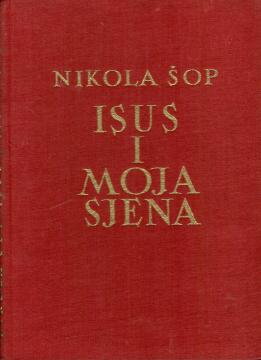
Isus i moja sjena
Jesus and My Shadow (1934) is Nikola Šop's most famous collection. The poet intimately humanizes Jesus and brings him into the everyday life of the poor, nature, and ordinary things. In a Franciscan spirit, he celebrates simplicity, poverty, and the divin
Nikola Šop (1904–1982) is one of the most original figures in Croatian religious poetry. The collection Jesus and My Shadow (1934) represents the culmination of his early, intimate phase and is one of the most significant works of Croatian spiritual poetry of the 20th century.
Šop develops the poetics of “chaste Catholicism” – simple, unadorned and close to the Franciscan spirit. Jesus Christ here is not a lofty, distant God, but a friend and companion of the poor man. The poet places him in everyday life: Jesus reads the newspaper, walks with the poor, dines in a tavern and sympathizes with the suffering of ordinary people.
The collection exudes a pastoral atmosphere – motifs include nature, small objects, children, animals and the poor. The lyrical subject is the “poor son” who finds a brother in Jesus. The poetry is contemplative, gentle, full of quiet joy and compassion, and criticizes the alienated modern civilization of machines.
The style is extremely simple, airy and musical, with a vernacular language without artificiality. Šop's religiosity is experiential and existential, inspired by St. Francis of Assisi and the French poet Francis Jammes.
Jesus and My Shadow remains Šop's most popular book because it combines deep spirituality with warmth and accessibility. Anthological poems such as "Jesus Reads the Newspaper" symbolize the message that holiness is hidden in quiet, everyday things. The work remains an oasis of peace in a noisy world today.
One copy is available
- Signature of previous owner