Rakovica
"Rakovica" is a fictionalized historical and political monograph about the Rakovica Uprising of 1871 and Eugen Kvaternik. An unfinished posthumous work with a profound psychological and national portrait of the Croatian politician and the uprising.
The book is a fictionalized documentary monograph about the Rakovica Uprising of 1871 – one of the most significant events of the Croatian national movement in the 19th century. Nehajev focuses on the character of Eugen Kvaternik, his ideas, motives, political vision and tragic fate, but also on the broader context of rightism, Croatian state-building thought and the conflict with the Austro-Hungarian system.
Unlike a classic historical study, Nehajev approaches the topic in his own characteristic way – through a psychological portrait of the protagonists and participants in the uprising. He depicts Kvaternik as a passionate, idealistic, but also complex man, faced with political disappointments, personal sacrifices and the impossibility of achieving Croatian independence in the circumstances of the time. The work combines documentary precision (based on historical sources) with literary treatment – an interior monologue, atmosphere and dramatic depiction of the events in Rakovica.
Rakovica is unfinished (Nehajev died in 1931), which gives it a special, fragmentary tone that further emphasizes the tragic nature of the theme. The style is mature, analytical and subtly lyrical, with a deep understanding of national history and human destiny. As in the novel Vuci, the author here demonstrates mastery in combining historical material with modern literary techniques – psychological introspection and reflection on the repeatability of Croatian national tragedies.
The work is important not only as a historical account of the Rakovica Rebellion but also as a testimony to Nehajev's late creativity, in which he increasingly turns to political-historical themes and portraits of great figures of the Croatian past (Frankopani, Kvaternik, Starčević, etc.).
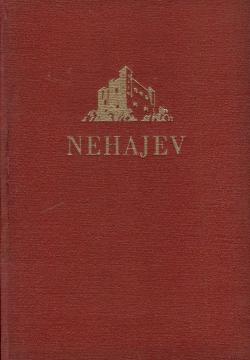
For lovers of Croatian history, rightism and quality fiction on national themes, this is an exceptionally valuable work. The 1944 edition, especially in its original cover, is a rarity on the antiquarian market and forms an important part of the complete works of Milutin Nehajev (1880–1931), one of the most educated and versatile authors of Croatian modernism.
One copy is available
- The cover is missing