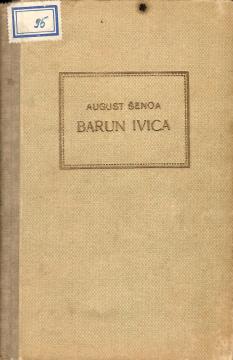
Barun Ivica
Baron Ivica depicts the disintegration of a peasant cooperative after the abolition of serfdom. Baron Ivica, a frivolous nobleman, exploits the peasants, leading to their moral and material decline. Šenoa criticizes the transitional society.
Baron Ivica August Šenoa's short story was published in 1874. It is one of the key works in Šenoa's cycle of contemporary short stories, in which the author addresses social changes in 19th-century Croatia. The work is particularly important because it realistically depicts the consequences of the abolition of feudalism and serfdom in the countryside around Zagreb.
The main theme is the disintegration of the traditional peasant cooperative (a joint family farm) under the influence of the new bourgeois and capitalist order. After the peasants were freed from feudal obligations, the old collective way of life began to collapse. Individuals became vulnerable to exploitation, greed, and moral decay. Šenoa shows through the story how freedom without education, solidarity, and strong moral values can lead to new forms of slavery – this time economic and spiritual.
The central character is Baron Ivica, a typical representative of the declining nobility: frivolous, wasteful, egotistical and ready to exploit the peasants who are formally free, but still economically dependent. His behavior symbolizes the transitional period in which the old feudal relations are disappearing, and the new bourgeois ones have not yet brought a more just order. The peasants in the story face divisions within the cooperative, loss of community, poverty and the temptations of money and individualism.
Here, Šenoa already strongly announces realism in Croatian literature: he emphasizes social criticism, the psychological motivation of the characters and a faithful depiction of social relations (village - city, nobleman - peasant, tradition - modernization). The work is not only a description of events, but also a moral parable about the need for education, harmony and ethical values in new times. He criticizes both the nobility who did not adapt to changes, and the peasants who were not ready for an independent life.
In the context of Šenoa's oeuvre, Barun Ivica stands alongside works such as Prosjak Luka, Prijana Lovra or Branka – all of which explore rural-urban relations, class conflicts and human weaknesses in the period of modernization. Barun Ivica is a powerful social critique, but also a call for responsibility and progress – typical of Šenoa, who believed in education and national awakening as a cure for social ills.
One copy is available
- Slight damage to the cover