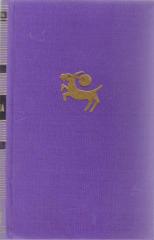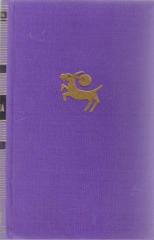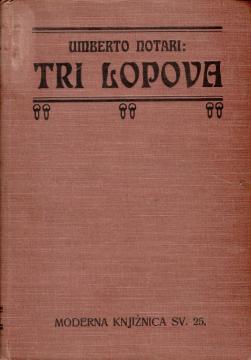
Tri lopova (Moj stric milijarder): Roman premodernih običaja
Rare book
Antique

Tri lopova (Moj stric milijarder): Roman premodernih običaja

Umberto Notari

Three Thieves is a satirical novel about three thieves of different levels — from a petty thief to a prominent financial manipulator. A witty critique of society, morality, and capitalism with the subtitle "My Billionaire Uncle."

The Italian writer, journalist and publisher Umberto Notari (1878–1950) published this satirical novel in 1908, and its Croatian translation appeared ten years later and quickly became popular among readers.

The Three Thieves is a witty and sharp satire on social norms, hypocrisy and capitalist morality. Through the story of three thieves of different profiles — from a small, likable thief who steals to survive, to a professional pickpocket, to a reputable thief in gloves who steals millions through stock market speculation and financial machinations — Notari shows how in society everyone steals, only the bigger thieves do it more legally and respectably.

The book has two subtitles: My Billionaire Uncle and A Novel of Premodern Customs – for Hermaphrodites of All Countries, which clearly indicates the author's ironic and provocative tone. Notari humorously and sarcastically takes on bourgeois society, its double standards, and the moneyed elite that enriches itself at the expense of others, while at the same time presenting itself as a pillar of society.

The style is lively, fast, and fluid, full of irony and witty observations. The novel is easy to read, but it carries sharp social criticism, which was a characteristic of Notari's works (he is also known for the scandalous novel Quelle signore).

In Croatia and Yugoslavia, this title was quite in demand in the interwar period because it perfectly suited the spirit of the times — a period of economic crisis, speculation, and growing dissatisfaction with the rich.

Today, The Three Thieves is an interesting testimony to Italian literature between the two wars and an excellent choice for fans of satirical prose, social criticism, and light but clever fiction.

Original title
I tre ladri (Mio zio miliardario): Romanzo di costumi ultramoderni
Translation
Vladimir Matošić
Dimensions
20 x 14 cm
Pages
104
Publisher
Moderna knjižnica, Zagreb, 1919.
 
Latin alphabet. Hardcover.
Language: Croatian.

One copy is available

Condition:Used, excellent condition
Damages or inconvenience notice:
  • Slight damage to the cover
 

Are you interested in another book? You can search the offer using our search engine or browse books by category.

You may also be interested in these titles

Prezir / Agostino

Prezir / Agostino

Alberto Moravia

In "Contempt," screenwriter Riccardo obsessively searches for the reason why his wife Emilia despises and alienates him. In "Agostino," a 13-year-old boy on a summer vacation with his mother experiences a sexual awakening and perceives his mother as a wom

Otokar Keršovani, 1966.
Croatian. Latin alphabet. Hardcover.
3.86
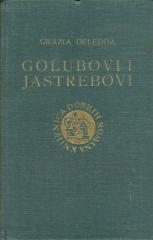
Golubovi i jastrebovi

Golubovi i jastrebovi

Grazia Deledda

In a typically Sardinian setting, through a dramatic love story, Deledda depicts the conflict between two families and their worlds – the peaceful, honest "doves" and the aggressive, greedy "hawks".

Hrvatsko književno društvo Sv. Jeronima, 1931.
Croatian. Latin alphabet. Hardcover.
8.54
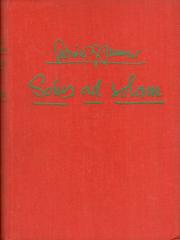
Solus ad solam

Solus ad solam

Gabriele D'annunzio

Solus ad solam (1910/1911) is an intimate, lyrical prose in which the author passionately and erotically describes his love for a woman, mixing ecstasy of body and spirit, poetic exaltation, and decadent sensuality.

Nakladni zavod Ante Velzek, 1940.
Croatian. Latin alphabet. Hardcover with dust jacket.
9.46
Maskarada / Bračna ljubav

Maskarada / Bračna ljubav

Alberto Moravia

In "Masquerade," Moravia satirically depicts fascist Italy through absurd political intrigue and disguise. "Marital Love" intimately explores erotic tension, possessiveness, and emotional alienation in everyday life.

Otokar Keršovani, 1966.
Serbian. Latin alphabet. Hardcover.
3.22 - 3.86
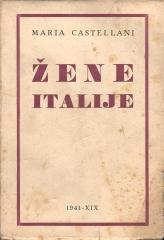
Žene Italije

Žene Italije

Maria Castellani

An overview of the history and position of Italian women from antiquity to Mussolini's fascist Italy, with an emphasis on their contribution to society and culture. A popular educational publication from the period of the Independent State of Croatia, wit

Società Editrice di Novissima, 1941.
Croatian. Latin alphabet. Paperback.
13.24
Čočara

Čočara

Alberto Moravia

Widow Cesira and her daughter Rosetta flee bombed Rome to their native Ciociaria, where they experience hunger, fear and misery. Liberation brings tragedy: Rosetta is raped by Moroccan soldiers, destroying their faith in God and people.

Otokar Keršovani, 1966.
Croatian. Latin alphabet. Hardcover.
3.96