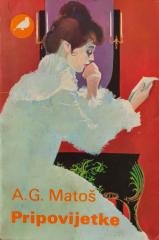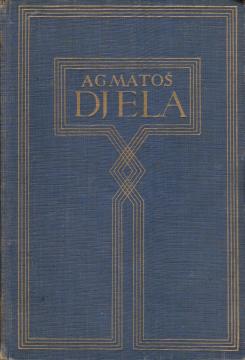
Djela 1: Iverje / Novo iverje
The first volume of the first critical edition of Matoš's collected works brings together early collections of sketches and short stories, Iverje (1899) and Novo iverje (1900) - humorous, satirical and fantastic stories with autobiographical motifs.
The book Djela 1: Iverje / Novo iverje, edited by Antun Barac, represents the first volume of the ambitious 17-volume edition Djela A. G. Matoš, which was published by Binoza from 1935 to 1940.). This is one of the most important pre-war critical editions of Matoš's work. The literary legacy was collected by Matoš's brother Milan Matoš, and Barac edited most of the volumes (including the first), setting the principles of textual processing: comparison of variants, notes on previous publications, orthographic adjustments, and minimalistic but precise introductory notes written in a strictly philological style.
The first volume contains two early collections of Matoš's prose:
- Iverje (1899, Matoš's first book) — six short stories/sketches published from 1892 to 1897. (e.g. Moć savejesti, Kip domovine leta 188**, Miš, Pretzels, friški pretzels...).
- Novo iverje (1900) — also six stories (e.g. the autobiographical Nekad bilo - sad se je najboljalo, and the masterpiece Camao).
In Napomene (which accompany each volume), Barac provided concise, encyclopedic information about the genesis of the texts, previous editions, and possible controversial variants. This edition is considered an attempt at a critical edition at the level of textology at the time and served as a model for later collected works (e.g. those of the JAZU from the 1950s and 1970s).
Iverje and Novo iverje mark the beginning of Matoš's narrative creativity. The stories combine the realism of petty-bourgeois and rural life, fantasy (dreams, symbolism), sharp irony, satire, and a nostalgic-lyrical tone. Here Matoš shows the influences of Gogol, Poe and French literature, but creates a recognizable Croatian modernist expression — witty, cynical, melancholic and linguistically rich (with Kajkavian elements in some texts).
This edition by Barč had great cultural significance: it made Matoš more accessible to a wider audience after his death in 1914 and helped canonize him as a central figure of Croatian modernity. The first volume focuses on the prose of the early phase (before Umorni priča from 1909), which best demonstrates Matoš's virtuosity in the short form — sketches and illustrations that mix autobiography, social criticism and universal themes (conscience, love, death, national identity).
The edition is rare and valuable for collectors today, and serves as a fundamental source for studying Matoš's work. Later editions build on Barč's philological approach.
One copy is available
- Slight damage to the cover